Quick Answer: Does Spraying Water on an AC Unit Help Cool?
Spraying water on your AC condenser does help it cool, but only for a few minutes. Water pulls heat away from the hot coil as it evaporates, working faster than outdoor air alone. The lasting payoff isn't that brief chill, it's the rinse itself, since clearing dust and pollen off the coil restores airflow the system had been quietly losing.
On service calls across Sunnyvale and the South Bay, our techs see the same pattern every summer: a dirty condenser that gets rinsed runs noticeably better the next day, not during the spray itself. If your system still struggles after a thorough cleaning, that points to a real mechanical issue, not something a garden hose can fix. At that point, it's worth having AC repair professionals take a closer look.
How Central Air Conditioners Work
When outdoor temperatures climb into the 90s during a Sunnyvale heat wave, the condenser works harder to expel heat from your home. That added strain is the entire premise behind water spraying as a cooling trick.
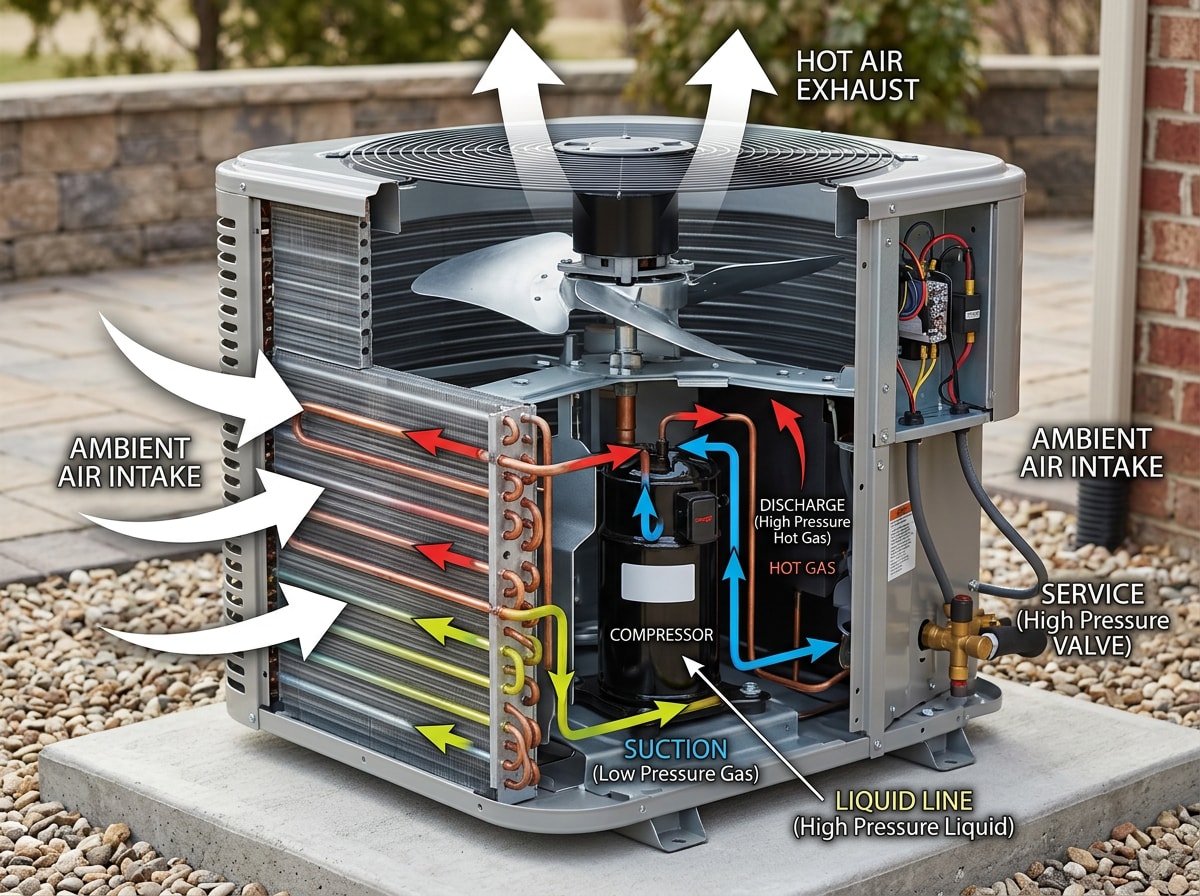
Here's the basic cycle:
- Refrigerant absorbs heat from indoor air at the evaporator coil.
- It travels to the compressor, which pressurizes it into a hot gas.
- That gas moves to the outdoor condenser coil, releases its heat into the outside air, and condenses back into a liquid.
- The cycle repeats.
The Role of Condenser Coils in AC Efficiency
Condenser coils are where the heat transfer actually happens. Refrigerant arrives as a hot, high-pressure gas and releases that heat into the outside air as it passes through the aluminum fins.
How well this works depends on three things: ambient temperature, airflow across the coil, and how clean the coil is. Dirt-caked fins block airflow and erode heat transfer efficiency long before most homeowners notice weaker cooling indoors.
The Science Behind Spraying Water on an AC Unit
When you spray water onto a hot condenser coil, you get a real but temporary cooling effect through evaporative cooling. As the water changes from liquid to vapor, it draws thermal energy away from the coil and the refrigerant lines running through it. This briefly lowers head pressure, so the compressor doesn't have to work quite as hard for a few minutes. Once the water evaporates, coil temperature climbs right back to where it started.
This isn't just a backyard theory. A controlled, nozzle-based condenser spray system tested under lab conditions produced real, measurable gains: the water spray cooling system leads to a significant COP enhancement up to of 6.16%, and the implementation of the water spray cooling technology at the condensing unit can lead to a 40% reduction in energy consumption . That's an engineered, continuous misting setup, though, not a homeowner giving the unit a quick blast from a garden hose once a week. On a system with a fixed-orifice metering device, a sudden drop in head pressure can also briefly reduce refrigerant flow, which is one reason technicians diagnosing a low-charge system don't want water thrown into the mix.
Climate Considerations: When Water Spraying May Help in Sunnyvale
In dry climates, evaporative cooling tends to work well because the air can absorb more moisture, which enhances the cooling effect at the coil surface. Sunnyvale's marine-influenced summers run moderately dry, so the trick has more room to work here than it would along the Gulf Coast.
In humid climates, the air is already close to saturated, so added water doesn't evaporate as readily. The cooling effect shrinks, and standing moisture can even encourage rust instead of helping airflow.
Benefits of Spraying Water on an AC Condenser
On the hottest days, spraying water on the condenser can offer a few genuine, modest benefits:
- Improved heat dissipation when the system is under the most strain
- Slightly less frequent compressor cycling
- A quicker drop in indoor temperature in some cases
- A cleaner coil, which is the benefit that actually lasts
Wetting hot condenser coils helps them shed heat faster through evaporation, so the compressor doesn't have to run as long to hit the thermostat setting. Over time, shorter run times can mean lower power bills.
These benefits are conditional, not guaranteed. They depend on local humidity and how dirty the coil already is. For units already struggling with worn parts or low refrigerant, a quick spray won't close the gap.
Risks and Potential Downsides of Spraying Water on an AC Unit
Making water spraying a daily habit introduces risks that outweigh the brief cooling boost. Frequent water exposure speeds up corrosion on metal fins and fasteners, especially once their protective coating wears down. Standing water pooling in the unit's base pan can encourage mold and mildew growth, and water directed near exposed parts raises a genuine electrical hazard.
OSHA's general electrical safety guidance is blunt about this risk: "Never operate electrical equipment while you are standing in water." The same logic applies to any outdoor unit with exposed electrical components.
| Scenario | Likely Outcome |
|---|---|
| Occasional rinse, dry climate | Mild cooling boost, cleaner coil, low risk |
| Occasional rinse, humid climate | Minimal cooling benefit, slightly higher rust risk |
| Daily spraying, any climate | Accelerated corrosion, possible mold, no lasting cooling gain |
| Spraying near electrical box | Real shock or short-circuit hazard regardless of climate |
Check your manufacturer's documentation before making this a routine, since some warranties specify approved cleaning methods, and mineral scale from hard water can also build up on coils over time.
Best Practices for Spraying Water on AC Units
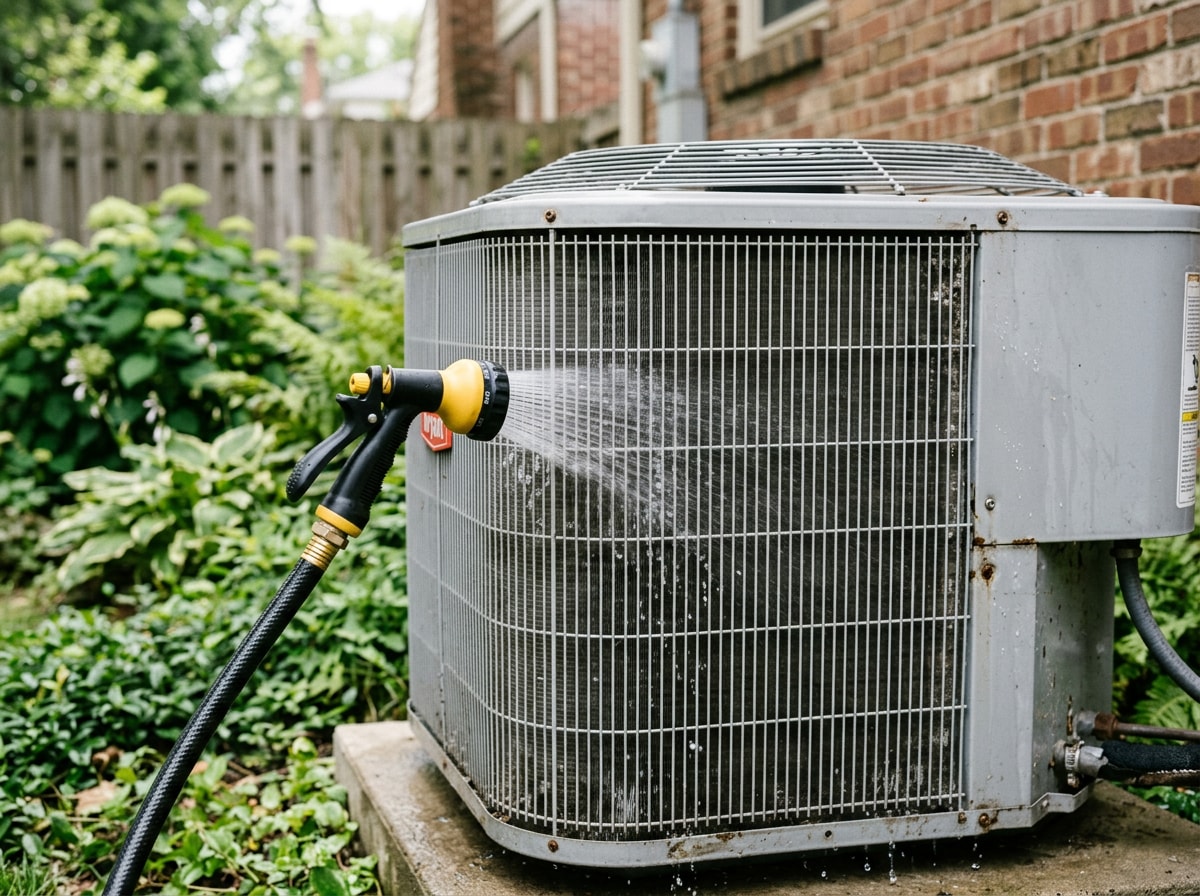
A gentle, low-pressure rinse beats an aggressive blast every time. Follow these steps for a safe, effective rinse:
- Use a regular garden hose with a fan or mist nozzle, never a pressure washer, which can bend the soft aluminum fins and ruin heat transfer.
- Spray during peak afternoon heat for the most noticeable, if temporary, cooling benefit.
- Aim the spray at the fins and coil surface, not the top vents.
- Shut off power at the disconnect before anything more than a casual rinse.
- Let the unit drain freely afterward. Standing water around the base invites rust and mold.
Avoid Electrical Components
Keep water off the control board, contactor, capacitor, and any exposed wiring inside the unit's electrical compartment. Never aim a hose directly into the disconnect box, even briefly.
These components aren't sealed against direct water intrusion the way the coil and fins are. The U.S. Department of Energy's maintenance guidance confirms why coil care matters so much in the first place: regular maintenance of your air conditioner's filters, coils, fins, and refrigerant lines is essential for efficient and effective performance, and neglecting maintenance leads to a decline in performance and increased energy use .
Spraying the Condenser While It's Running vs. Turned Off
Both approaches are safe when you follow basic precautions, and the choice mostly comes down to convenience. Spraying the coil while the AC is running has one practical advantage: the fan keeps pulling air inward through the coil, carrying loosened debris out as you rinse.
Turning the unit off first makes more sense if you're planning to open the access panel or spend extended time close to the fan blades. If you do shut it off, give the system about 30 minutes to drain before restarting so water doesn't get pulled back into components it shouldn't reach.
Recommended Cleaning Methods for AC Units
If plain water leaves a film behind or the coil still looks packed with grime, a foaming coil cleaner made for condensers lifts embedded dirt better than water alone. Turn the system off, apply the cleaner according to the label, let it foam for five to ten minutes, then rinse thoroughly and let everything dry before restarting.
This matters more than it sounds. ENERGY STAR's own maintenance checklist points out that dirty coils reduce the system's ability to cool your home and cause the system to run longer, increasing energy costs and reducing the life of the equipment . Restoring airflow is what actually lowers head pressure, shortens run times, and brings down electric bills, not the momentary spray itself.
If a condenser won't even power on after a rinse, that's usually a separate electrical or capacitor issue rather than a water problem. Our write-up on AC condensers not turning on walks through the most common causes and what they cost to fix. Sunnyvale homeowners dealing with persistent buildup, weak airflow, or an aging condenser can find a qualified technician through our Sunnyvale, CA service area page, or reach out directly for a free estimate.
When a Rinse Isn't Enough
A clean coil fixes an airflow problem. It does not fix a refrigerant leak, a failing compressor, or a condenser fan motor on its way out. If your system still runs hot or short-cycles after a proper cleaning, those are signs of a mechanical problem that needs a trained eye.
Common next steps include:
- Checking refrigerant charge and pressures
- Testing the capacitor and contactor
- Inspecting the condenser fan motor
- Evaluating whether the unit needs a condenser unit replacement if the coil itself is corroded beyond cleaning
Our team at Air Control Mechanical handles exactly these diagnostics across the South Bay, and a same-visit inspection usually settles whether you're looking at a simple fix or a bigger repair.
FAQ
Does spraying water on an AC unit help it cool?
Spraying water on an AC unit produces only a brief, temporary drop in coil temperature through evaporative cooling. The moment the water evaporates, the effect disappears. It doesn't fix underlying system problems, so don't treat it as a repair.
Is it safe to spray water on an AC condenser?
Yes, briefly rinsing the condenser coil with water is generally safe and can temporarily improve heat transfer. It's not a substitute for addressing real issues like low refrigerant or an aging compressor.
Can I hose down my outside AC unit while it is running?
Yes. Outdoor condensers are built to withstand rain, so a garden hose on the fins won't cause harm as long as you avoid the electrical compartment and never use a pressure washer.
How often should I spray or rinse my AC condenser?
A rinse every few weeks during cooling season is plenty for most Sunnyvale homes. Units near landscaping, construction dust, or heavy pollen may need it more often.
Will spraying water void my AC's warranty?
Possibly. Some manufacturers specify approved cleaning methods, so check your warranty documentation before making water spraying part of your regular routine.
What is the best alternative to spraying water on an AC unit?
Regular professional maintenance, proper coil cleaning, and shading the outdoor unit from direct sun all do more for long-term efficiency than ad hoc spraying. A scheduled AC maintenance and repair visit catches problems before they affect performance.
About the Author
This guide was written by Daniel Ortega, a NATE-certified HVAC technician with Air Control Mechanical, which has served Sunnyvale and the greater Bay Area for over a decade. Daniel and the team diagnose and repair condenser, compressor, and airflow issues on residential and commercial systems throughout Santa Clara County. Questions about your own system? Contact Air Control Mechanical for a free estimate.