A solar water heating system in Santa Cruz, CA can still cut your monthly utility bill, but the incentive picture changed heading into 2026 in ways most homeowners haven't caught up on yet. Before you sign a contract, you need current numbers on cost, tax credits, and what the coastal climate actually does to collector output. This guide walks through all three, plus what permitting and repair look like locally.
Is a Solar Water Heater Worth It in Santa Cruz's Coastal Climate?
Santa Cruz's marine layer burns off most mornings by late morning, which trims daily output compared to inland Central Coast towns. Solar thermal collectors still capture useful energy through that haze, though, because they respond to diffuse light, not just direct sun. That's different from solar PV panels, which lose more efficiency under heavy cloud cover.
The bigger variable is usually household hot water demand, not weather. A two-person household with a smaller tank and an efficient showerhead will see a solar thermal system cover a much larger share of its hot water needs than a five-person household running two showers and a dishwasher back to back. Sizing the collector area and tank to actual usage, not a generic rule of thumb, is the single biggest factor in whether a system pays off here.
2026 Incentive Update: The Federal Credit Is Gone, One State Break Isn't
Here's the part most older articles on this topic get wrong for 2026. The federal Residential Clean Energy Credit (25D), which used to return 30% of a qualifying solar water heater's installed cost, is no longer available. The Residential Clean Energy Credit equals 30% of the costs of new, qualified clean energy property for your home installed anytime from 2022 through December 31, 2025, and the credit is not available for any property placed in service after December 31, 2025. If a contractor or an older blog post tells you to expect a 30% federal write-off on a 2026 install, that information is outdated.
There is still one meaningful California break worth acting on, though, and it has its own deadline. California's Active Solar Energy System property tax exclusion keeps qualifying solar installations, including solar water heating equipment, from raising your home's assessed value. Section 73 is scheduled to sunset on January 1, 2027, and any active solar energy system that was excluded prior to this date will continue to be excluded until a change in ownership occurs. In plain terms: a system that passes final inspection in 2026 locks in the tax protection for as long as you own the home. A system completed in 2027 or later won't get it.
Because the federal credit is off the table, eligibility for any remaining program still runs through equipment certification. Confirm that any system you're quoted meets Solar Uniform Energy Factor requirements. A non-solar water heater can be certified as ENERGY STAR by meeting Uniform Energy Factor criteria, while solar water heaters must meet minimum Solar Uniform Energy Factor criteria to be certified as ENERGY STAR. Ask for that documentation in writing before you pay a deposit.
Solar Water Heater Costs in Santa Cruz, CA (2026)
Expect a wider price range than a standard tank because collector type, roof complexity, and whether the system is active or passive all move the number.
| System Type | Typical Installed Cost | Avg. Lifespan | Backup Heater Needed |
|---|---|---|---|
| Passive solar thermal | $3,000–$6,500 | 15–20 yrs (collectors) | Usually, for cloudy stretches |
| Active solar thermal (pumped) | $6,000–$11,000 | 15–20 yrs (collectors); 10–15 yrs (tank) | Yes, built in |
| Gas storage tank | $1,800–$3,500 | 8–12 yrs | N/A |
| Electric storage tank | $1,500–$3,000 | 8–12 yrs | N/A |
| Heat pump water heater | $3,000–$5,500 | 10–15 yrs | N/A |
Without the federal credit, simple payback now depends almost entirely on your household's hot water load, current utility rates, and whether the system qualifies for the property tax exclusion before the 2027 cutoff. Treat installer quotes that promise a fast payback with some skepticism until you see the math behind it.
How Solar Water Heaters Work and What Certification Means for You
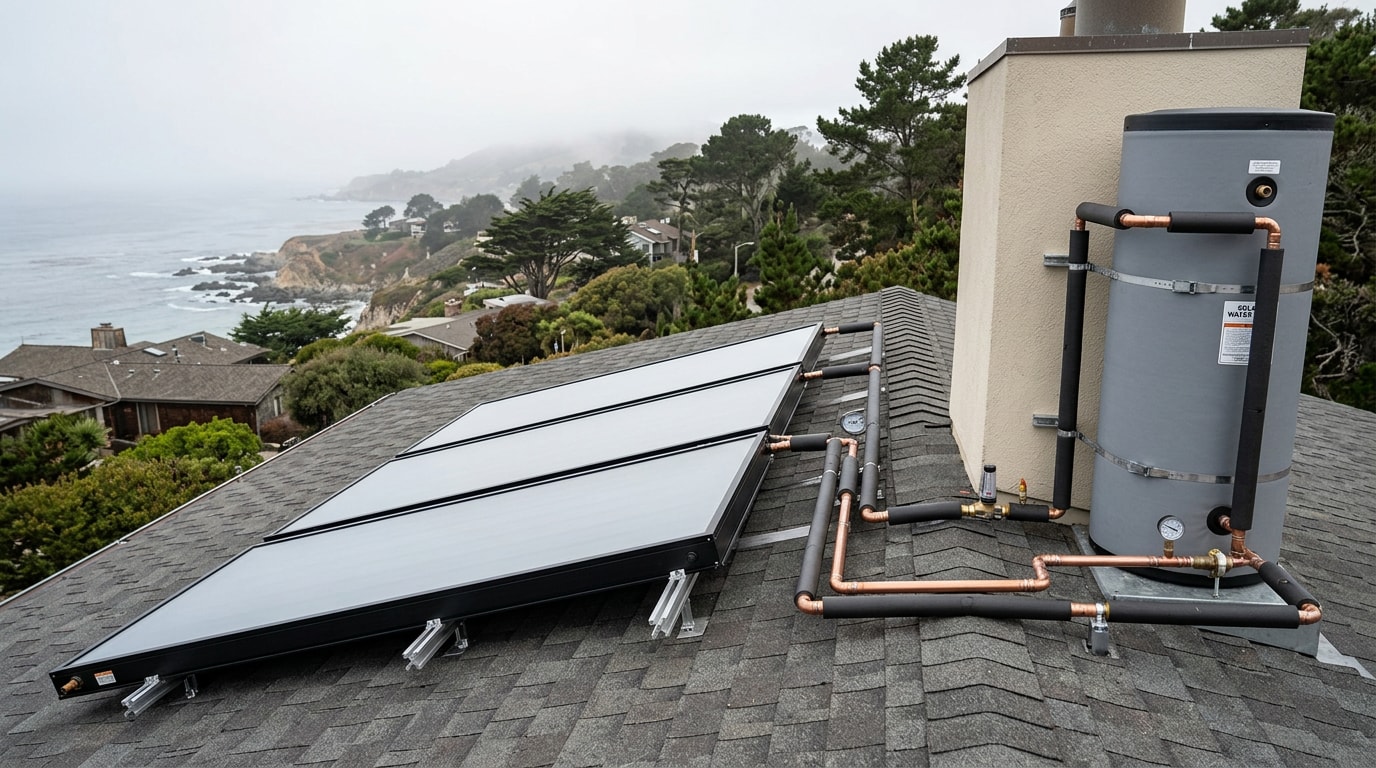
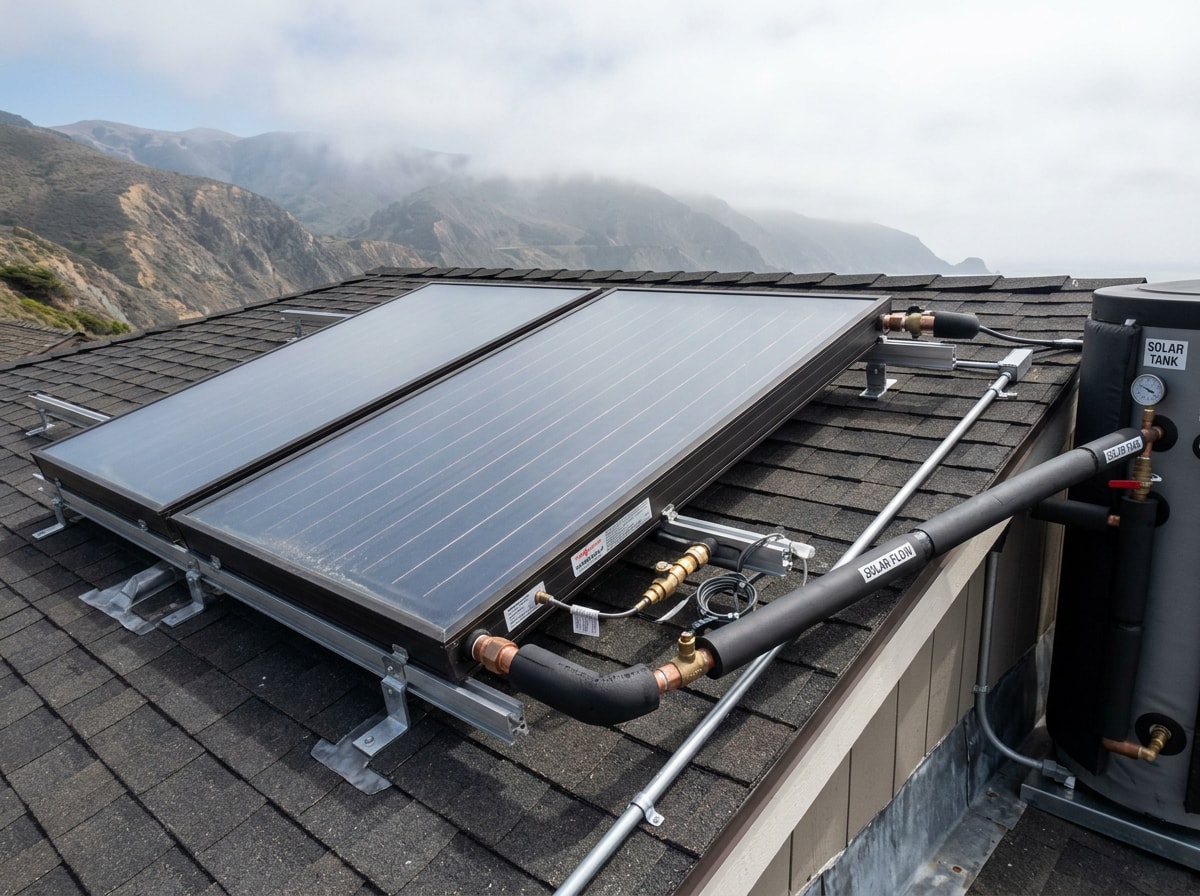
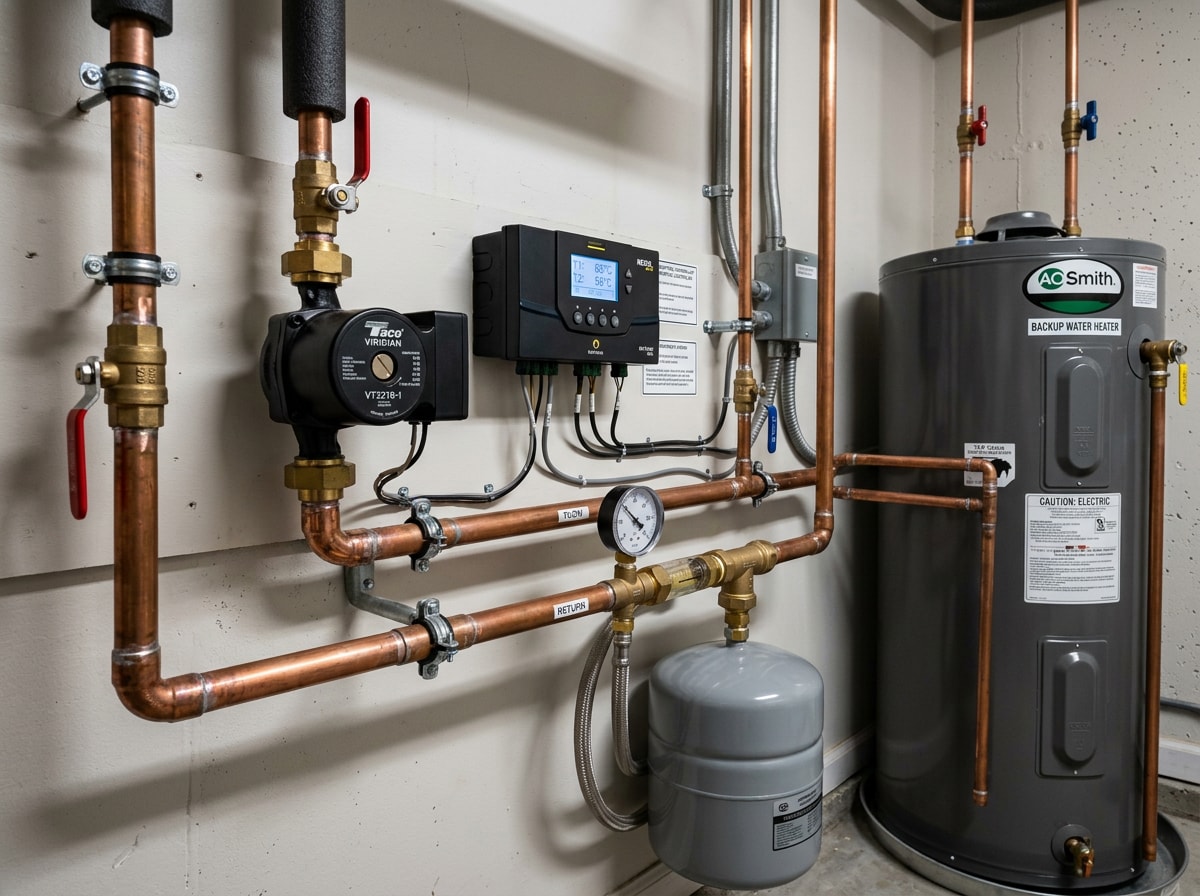
Every solar water heater has two core parts: a roof-mounted collector and an insulated storage tank. Passive systems move water by natural convection and have no pump to maintain. Active systems use a small circulation pump and controller, which adds mechanical complexity but also lets the system work on roofs where a passive unit's tank placement wouldn't make sense.
Key differences that affect your decision:
- Passive systems cost less upfront, have fewer parts to fail, but perform less consistently in cold snaps.
- Active systems cost more and need periodic pump and controller service, but handle variable roof layouts and freeze risk better.
- Backup heating is standard on nearly every residential system sold today, since no solar thermal setup is expected to meet 100% of demand on its own.
- Certification matters even without the federal credit, because some utility and manufacturer warranties still require it.
If you're also weighing an all-electric alternative, a heat pump water heater pulls ambient heat instead of sun and doesn't require roof space at all. Our heat pump installation team can walk through that comparison against a solar thermal quote if you want a side-by-side before committing.
Permits and Installation Requirements in Santa Cruz County
Solar water heater installation touches plumbing, and often electrical and structural work too, so permitting isn't optional. Santa Cruz County routes straightforward trade work through its EZ Permit system. EZ Permit project examples include minor electrical, plumbing, or mechanical alterations, as well as forced air unit, water heater, fireplace insert, window, and siding replacements. More involved active systems with new roof penetrations or electrical circuits may need additional plan review, so confirm scope with the county's Unified Permit Center before work starts.
A qualified installer handles permit pulls as part of the job. If a quote doesn't mention permits at all, treat that as a red flag, not a cost savings.
Repairs, Maintenance, and Backup System Support
Most solar water heater complaints trace back to a handful of causes: a failed circulation pump, a stuck or miscalibrated controller, mineral buildup in the tank, or a backup heating element that's quietly been doing all the work for months. Inconsistent water temperature or a sudden lack of hot water usually points to one of these rather than a dead collector.
Passive systems need very little upkeep beyond an occasional panel rinse. Active systems benefit from an annual check of the pump, sensors, and glycol fluid level, since a slow leak in the heat-transfer loop can go unnoticed until output drops noticeably.
Where this intersects with our work: when the backup heating element, control wiring, or circuit feeding the pump fails, that's electrical and mechanical troubleshooting we handle directly. Our electrical component repair technicians diagnose pump and control failures on the conventional side of these systems, and our temperature control system upgrade service covers the controllers that manage backup heating cycles. In our service calls across the Central Coast, backup elements that get ignored tend to fail years earlier than ones checked annually, simply because homeowners assume the solar side is doing more of the work than it actually is in winter.
For dedicated solar collector or SRCC-rated equipment repair, you'll want a certified solar thermal specialist, since that work falls outside standard HVAC licensing. A good local installer should be transparent about where their scope ends.
Choosing a Qualified Solar Water Heater Contractor
Before hiring anyone for a solar thermal project, ask these questions directly:
- How many solar water heater installations have you completed, specifically, not general plumbing or HVAC work?
- Is the proposed equipment SUEF-certified, and can you provide documentation?
- What's covered under warranty, and for how long, on the collector, tank, and pump separately?
- Who pulls the permit, and is that cost already in the quote?
- Will this system qualify for the property tax exclusion if completed in 2026?
A contractor who answers all five without hesitation and offers recent local references is worth a serious look. If you'd rather start with a conversation about whether solar thermal, a heat pump water heater, or a backup system upgrade fits your Santa Cruz home best, request a free estimate and we'll walk through the options.
Air Control Mechanical serves homeowners throughout the Santa Cruz, CA area, handling the heating, electrical, and controls side of water heating projects alongside our broader heating contractor services. For Santa Cruz homeowners also thinking about cooling upgrades this year, our home and business AC guide for Santa Cruz covers that side of the house. You can also learn more about our full range of work on our homepage.
About the author: This guide was reviewed by Air Control Mechanical's lead mechanical technician, who has handled HVAC, water heating, and electrical component service calls across Santa Cruz County. Questions about a specific property? Contact our team directly.
FAQ
Is a solar water heater still worth it in California in 2026?
Yes for many households, but the math changed. Without the 30% federal credit, payback depends more heavily on your hot water usage, current utility rates, and whether the system qualifies for California's property tax exclusion before it sunsets on January 1, 2027.
Is there still a tax credit for solar water heaters in 2026?
No federal credit. The credit is not available for any property placed in service after December 31, 2025. The remaining California benefit is the property tax exclusion on qualifying systems completed before the 2027 deadline, not a direct rebate or credit.
How much does a solar water heater cost to install in Santa Cruz?
Passive systems typically run $3,000 to $6,500 installed. Active systems with a pump and controller run $6,000 to $11,000, depending on tank size and roof complexity.
Do solar water heaters work on foggy or cloudy days?
Yes, to a reduced degree. Collectors still capture diffused solar radiation when direct sun is blocked, though output drops versus a clear day. Nearly all residential systems include a gas or electric backup heater for extended overcast stretches or high winter demand.
How long does a solar water heater last?
Collectors typically last 15 to 20 years. Storage tanks run 10 to 15 years before needing replacement, and pumps or controllers on active systems often need service sooner than that.
Do I need a permit to install a solar water heater in Santa Cruz County?
Yes. EZ Permit project examples include minor electrical, plumbing, or mechanical alterations, as well as forced air unit and water heater replacements. More complex active systems may require additional plan review, so confirm scope with the county before work begins.