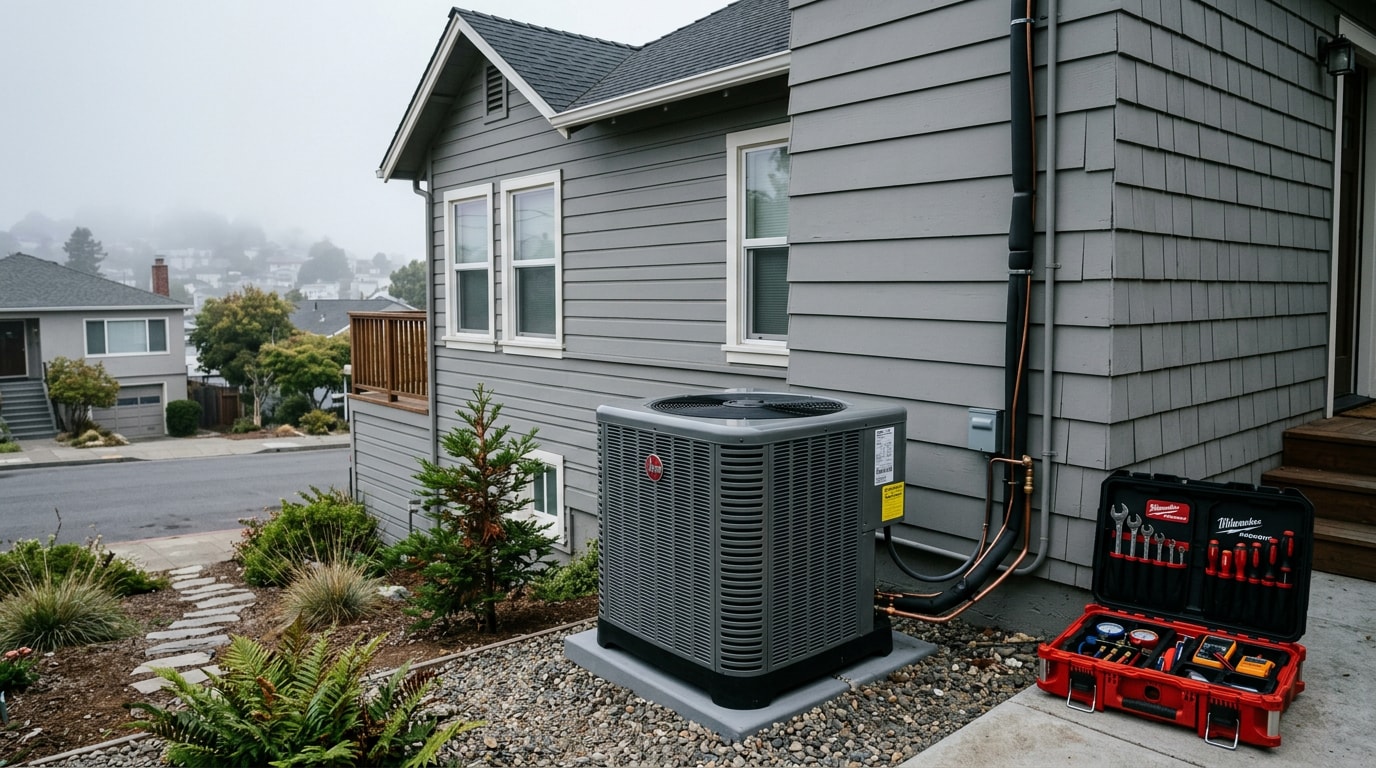
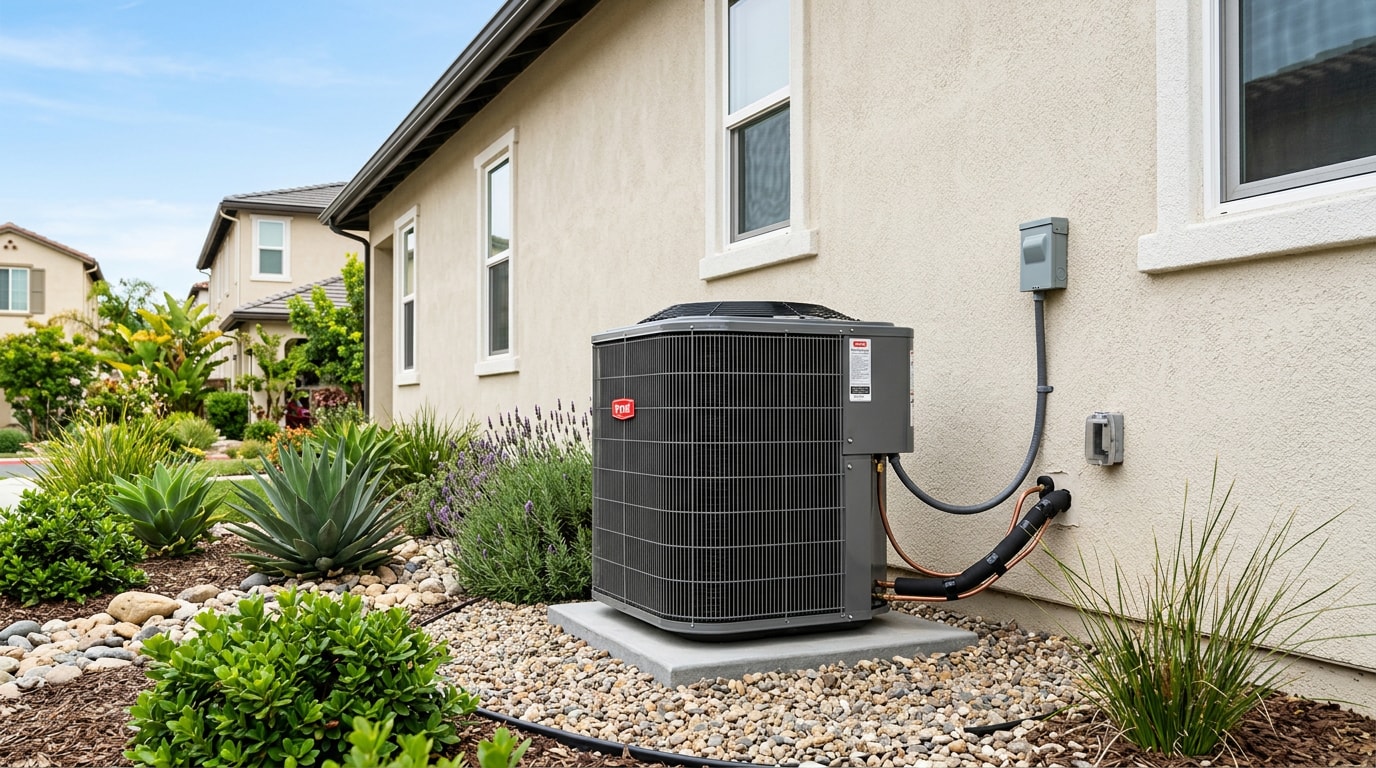
If your ac condenser not turning on San Carlos, CA problem has left your outdoor unit dead silent on a warm afternoon, the cause almost always falls into one of six categories. Most homeowners can rule several out in under ten minutes before deciding whether a repair call is actually needed. Here's where to start.
Common Reasons for an AC Condenser Not Turning On
Circuit Breaker or Power Supply Issues
A tripped breaker is the single most common reason a condenser refuses to start. Older San Carlos and Bay Area homes often carry original electrical panels from decades past, and those panels tend to produce nuisance trips more often than newer installations.
Before assuming the worst, check the dedicated AC breaker, the outdoor disconnect switch, and any blown fuses. A power supply interruption is often the quickest fix in this entire guide. Sometimes it really is just a flipped switch.
Thermostat Issues
Sometimes the condenser isn't broken at all. It simply isn't being told to run. Dead thermostat batteries, a setting stuck on "heat" instead of cool mode, or a thermostat that's lost communication with the outdoor unit can all look identical to a hardware failure.
Check that the thermostat is calling for cooling and that the display is responsive before moving to more technical checks. A smart thermostat installation can also eliminate miscommunication issues on older, non-communicating thermostats.
Faulty Capacitor
A failed capacitor is one of the most frequent component-level reasons a condenser hums but won't start. Capacitors store the electrical charge that kicks the compressor and fan motor into motion, and they wear out gradually from heat cycling and age.
A bulging or leaking capacitor case is a visible warning sign. Replacing a capacitor is inexpensive in parts, but it involves stored electrical charge that can shock someone even after the unit is powered off. This is a job for a licensed technician, not a weekend DIY project, which is also why OSHA's lockout/tagout energy-control standard exists for anyone servicing this kind of equipment professionally.
Worn or Bad Contactor
The contactor acts as the relay switch that sends power to the compressor and fan whenever the thermostat calls for cooling. Over thousands of on-off cycles, the contacts pit, burn, or weld shut, which can either stop the condenser from starting or cause it to run constantly.
A bad contactor often produces a faint clicking or buzzing sound without the fan actually spinning. Our technicians typically find capacitor and contactor failures together more often than either one alone, since both components age under the same heat cycling.
Airflow Blockage and Dirty Condenser Coils
Bay Area yards generate plenty of leaves, pollen, and fast-growing landscaping that can crowd an outdoor unit within a single season. When coils and fins get caked in debris, the condenser can overheat and shut itself down as a safety measure, mimicking an electrical failure.
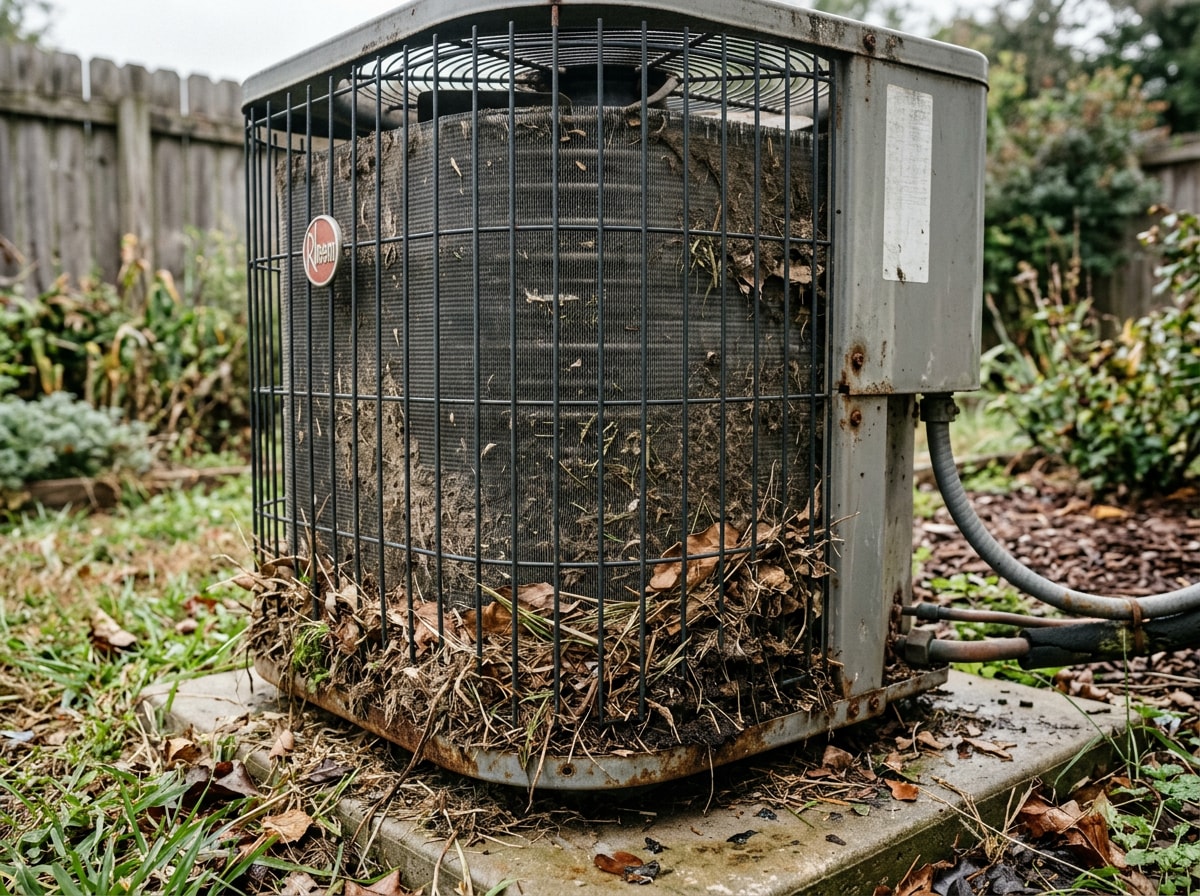
Keeping at least two feet of clearance around the unit helps prevent this type of shutdown. The U.S. Department of Energy notes that regular maintenance of an air conditioner's filters, coils, fins, and refrigerant lines is essential for efficient and effective performance, and neglecting maintenance leads to a decline in performance and increased energy use .
Compressor Failure
Compressor failure is the most serious and expensive cause on this list, and it's usually the reason a condenser not starting turns into a full replacement conversation. Because compressors are sealed, highly engineered components, diagnosing and repairing one isn't a realistic DIY task. If a technician confirms compressor failure, a condenser unit replacement is usually more cost-effective than repair on an older system.
Troubleshooting Steps for a Non-Starting AC Condenser
Work through these steps in order once you have a sense of the likely cause. Some are safe for any homeowner to try; others require a licensed technician.
Check the Circuit Breaker
Start at the electrical panel. Locate the breaker labeled for the AC or condenser, and if it's tripped, reset it once by switching it fully off, then back on.
- Safe to reset yourself: a single trip after a storm, power flicker, or recent electrical work.
- Stop and call a pro: the breaker trips again immediately, or trips repeatedly within the same day. That pattern points to a short or an overloaded circuit, not a fluke.
In the San Carlos area, a standard HVAC diagnostic callout for a repeat-trip issue typically runs in a similar range to the broader Bay Area figures covered in our HVAC estimate pricing guide, which outlines what local labor and permit costs look like going into 2026.
Confirm the Power Switch and Disconnect Box
Every condenser has an outdoor disconnect box mounted near the unit, and it's easy to bump during yard work, fence repairs, or landscaping projects. Open the box and confirm the pull-out fuse or switch is fully seated and in the "on" position.
This two-minute check gets overlooked constantly, partly because the disconnect box looks like it's just part of the housing.
Check Voltage at the Contactor
This step requires a multimeter and direct contact with live electrical components, so it belongs to licensed technicians rather than DIY troubleshooting. Checking voltage at the contactor confirms whether power is reaching the compressor circuit, which helps isolate an electrical fault from a mechanical one.
Working around energized HVAC parts without training carries a real risk of serious shock or injury. If you've gotten this far without finding the problem, this is the point to stop and schedule an electrical component repair instead of continuing to test it yourself.
Clear Airflow Blockages Around the Unit
If the condenser is buried in leaves, ivy, or built-up grass clippings, clear the debris by hand and rinse the fins gently with a garden hose. Never use a pressure washer, since it can bend the delicate metal fins. Trim back any plants growing within two feet of the cabinet.
For a deeper clean of the internal coils, a professional air conditioning repair visit can flush the system without risking damage to the fins or electrical components. A clogged air filter can also starve airflow enough to trigger a safety shutdown, so check or replace it as part of this step.
Call in an HVAC Service Professional
Some symptoms mean it's time to stop troubleshooting and pick up the phone: a breaker that keeps tripping, a burning smell, visible refrigerant oil stains, or a compressor that hums but never starts. Refrigerant-related repairs legally require an EPA-certified technician, since regulations under Section 608 of the Clean Air Act require that technicians who maintain, service, repair, or dispose of equipment that could release ozone-depleting refrigerants be certified , so this isn't a step you can shortcut even if you wanted to.
If you're in San Carlos and the unit still won't start, an emergency HVAC repair technician can usually diagnose the issue same-day during peak summer season. You can get a free estimate before any work begins.
Outside AC Unit Repair Costs
Repair costs vary widely depending on what's actually wrong, and Bay Area labor rates tend to run above the national average. The ranges below are general planning figures, not a quote, since every diagnostic visit depends on the unit, access, and time of year.
| Cause | DIY Possible? | Typical Local Cost |
|---|---|---|
| Tripped breaker reset | Yes | $0 |
| Disconnect switch bumped | Yes | $0 |
| Capacitor replacement | No | $150–$350 |
| Contactor replacement | No | $150–$300 |
| Coil cleaning / airflow service | Partial | $0–$250 |
| Compressor replacement | No | $1,800–$3,200+ |
These ranges assume a standard residential split system and can shift based on unit age, refrigerant type, and accessibility. For an accurate number, request a diagnostic visit through our contact page rather than relying on a phone estimate alone.
Final Thoughts on an AC Condenser Not Turning On
Most cases of an ac condenser not turning on trace back to something simple: a breaker, a switch, or a thermostat setting, rather than a catastrophic failure. Work through the safe DIY checks first, but don't push past your comfort level once electrical testing or refrigerant components are involved.
San Carlos summers don't leave much room for a multi-day cooling outage, so prompt diagnosis matters more here than in milder climates. Catching a worn capacitor or dirty coil early often prevents a far more expensive compressor failure down the road. The team at Air Control Mechanical handles this exact issue across the Peninsula, including San Carlos and surrounding cities.
FAQ
Why is my outside AC unit not turning on?
The most common reasons are a tripped breaker, a thermostat not calling for cooling, or a failed capacitor. Power issues and electrical component failures account for the large majority of cases, while a bad compressor is less common but more serious. Checking the breaker and thermostat first takes only a few minutes.
Why is my AC condenser humming but not starting?
A humming sound without the fan spinning almost always points to a failing capacitor or a motor that's physically stuck. The capacitor isn't delivering enough of a starting charge to overcome the motor's resistance, so it hums instead of kicking on. This usually requires a technician to replace the part safely.
Why is my inside AC unit running but the outside unit is not turning on?
Indoor and outdoor AC components typically run on separate circuits and sometimes separate breakers, so one can fail while the other keeps working. This symptom usually isolates the problem to the outdoor breaker, disconnect switch, contactor, or capacitor rather than the thermostat or indoor air handler. It rarely points to a thermostat issue since the indoor unit is clearly receiving a signal.
Can a dirty air filter stop the outdoor condenser from starting?
Yes, in some cases. A severely clogged filter restricts airflow enough that the system can trip a safety switch and shut the whole unit down, including the outdoor condenser. Replacing the filter is one of the fastest, cheapest checks before calling for air filter replacement service.
How much does it cost to fix an AC condenser that won't turn on?
It depends entirely on the cause. A tripped breaker or bumped disconnect switch costs nothing to fix yourself, while a capacitor or contactor replacement typically runs $150 to $350 in parts and labor. A full compressor replacement is the most expensive outcome and can run well over $1,800 depending on the system.
Why won't my outdoor AC unit turn on?
It typically comes down to power delivery, a thermostat miscommunication, or a failed component like a capacitor or contactor. Work through the troubleshooting steps above in order, starting with the breaker and disconnect box before moving to component-level checks. If the unit still won't start after those basic checks, a licensed technician can pinpoint the exact cause quickly.
---
Air Control Mechanical is a licensed C-20 HVAC contractor serving San Carlos and the greater Bay Area. Our technicians diagnose and repair residential condenser, furnace, and thermostat issues throughout the Peninsula. Contact us to schedule a diagnostic visit.