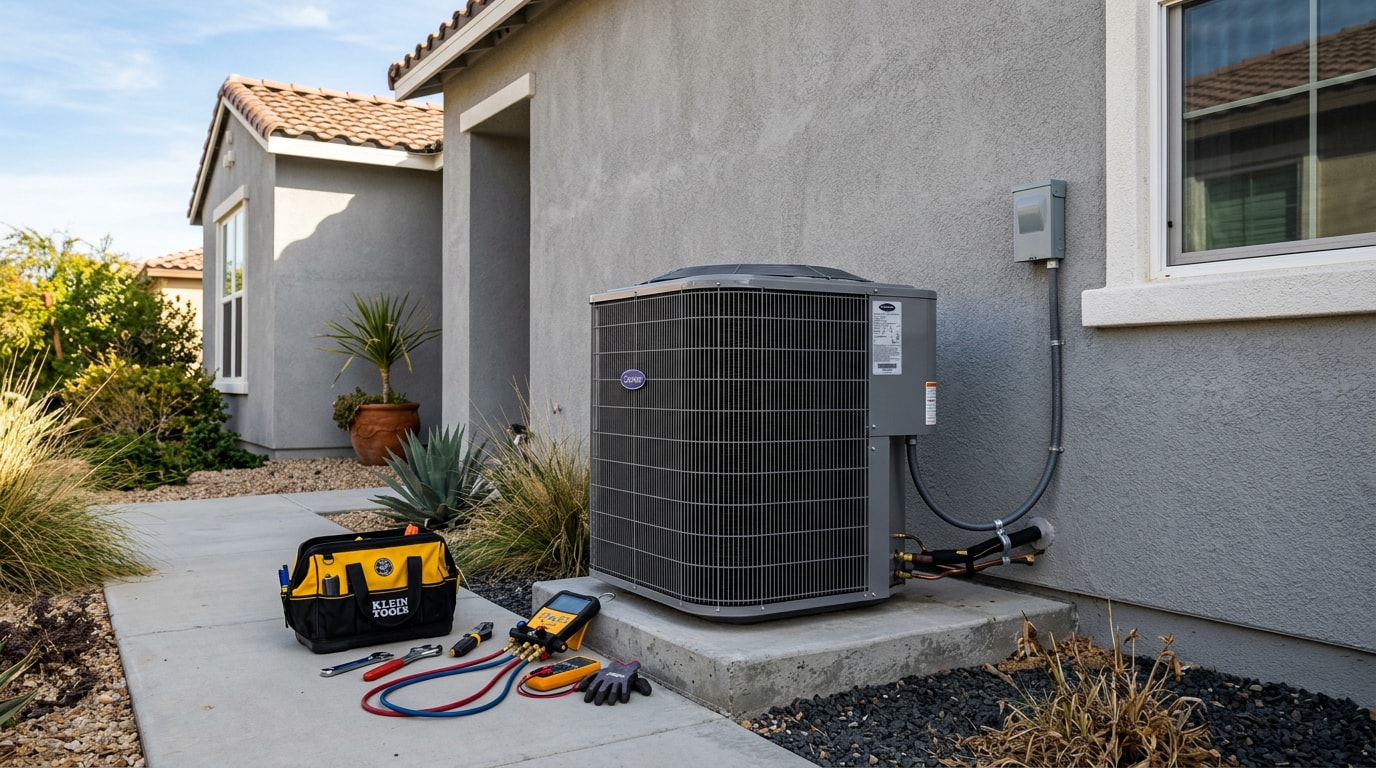
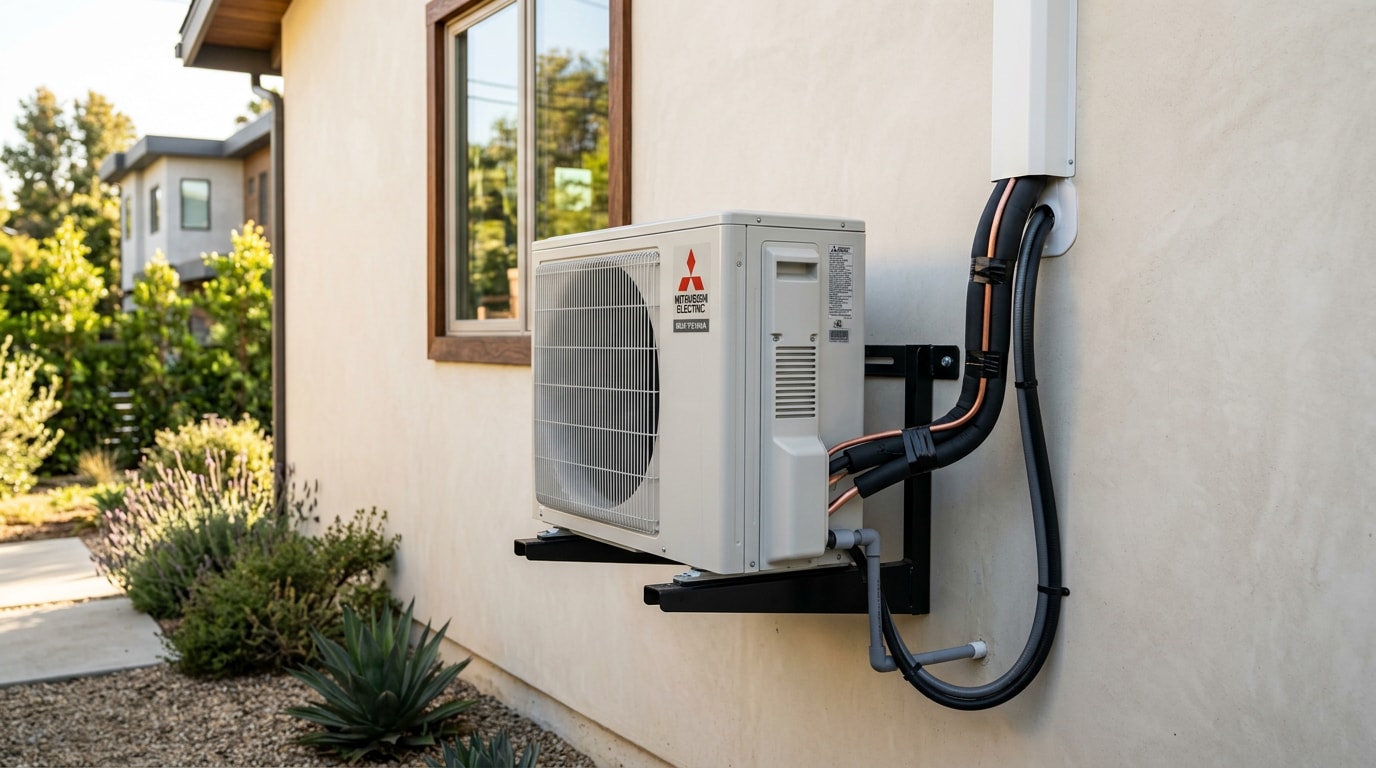
Mini split air conditioner installers in Palo Alto, CA deal with a specific problem: most of the city's housing stock was never built with ductwork. This guide breaks down what installation actually costs here in 2026, which permits and rebates apply, and the mistakes that cause the most callbacks. Read it before you book a quote.
Why Palo Alto Homes Are Prime Candidates for Ductless Mini-Splits
Palo Alto's Eichler tract homes sit on concrete slabs with radiant-floor heat and no attic duct space, which makes running traditional ductwork impractical or impossible without major demolition. Pre-1970 bungalows in Professorville and College Terrace have the same issue on a smaller scale. A ductless mini-split sidesteps all of that: refrigerant lines run through a small wall penetration instead of a duct chase, and each indoor head cools only the room it serves instead of conditioning empty space. Browse our mini-split system installation services to see what a typical project includes.
What Mini-Split Installation Costs in Palo Alto, CA (2026)
Cost is the first question almost every homeowner asks, and the honest answer depends on zone count, BTU capacity, and whether your panel needs an upgrade.
| Configuration | Typical Installed Cost |
|---|---|
| Single-zone, 9,000-12,000 BTU | $2,000 - $4,500 |
| Single-zone, 18,000-24,000 BTU | $2,500 - $5,500 |
| 2-zone multi-split | $4,500 - $8,000 |
| 3-zone multi-split | $6,500 - $10,500 |
| 4-zone multi-split | $8,500 - $14,000 |
Mini-split installation costs $2,000–$5,500 for a single zone and $4,500–$14,000 for multi-zone systems with professional installation included , and the final number depends on how many indoor heads you need, the brand you choose, line set length, and whether your electrical panel needs an upgrade .
Palo Alto publishes its own number that's more useful than any national average, because it's built around local labor rates and the city's own rebate. Through the city's Electrify My Home full-service program, a Heat Pump Mini-Split System (ductless, inverter-driven), 1-3 Zone, runs $3,250 to $10,900, with prices all-inclusive and covering equipment, materials, and a standard one-year warranty . That figure already has the rebate baked in, which is the closest thing to a real local benchmark you'll find. Want a number specific to your house? Get a free estimate and we'll run the math against your actual square footage and zone count.
City of Palo Alto Rebates and Incentives for Heat Pump Mini-Splits
Most installer sites skip this, but it changes your out-of-pocket cost more than any contractor discount will. The City of Palo Alto offers a $2,500 rebate for homeowners replacing their fossil fuel-based heating systems with a heat pump HVAC system, available to all residents, with an increased amount of $5,000 for income-eligible residents . The catch: you have to apply before work starts, not after.
Add-on rebates stack on top of the core incentive. You can save $500 per circuit, up to a total of $2,500, when preparing for an appliance upgrade, and this applies to new heat pump water heaters, heat pump space heating and cooling systems, or electric cooktops/ranges . If your mini-split requires a new dedicated circuit, as most do, this covers a meaningful chunk of that electrical work. Full program details, current rebate caps, and the application portal are on the City of Palo Alto Electrify My Home page.
The Site Survey: Load Calculations and System Sizing
A proper mini-split installation starts with a Manual J load calculation, the industry-standard method installers use to measure square footage, insulation, window orientation, and occupancy before recommending BTU capacity. This step is what separates a system that runs efficiently from one that short-cycles on mild days or struggles to keep up during a September heat wave. Skipping it is the single most common reason a mini-split gets a bad review three summers later.
Choosing Indoor and Outdoor Equipment
Indoor comfort comes from a few head styles, and the right one depends on your room layout more than brand preference.
- Wall-mounted units for simple bedroom or living-room installs
- Ceiling cassettes that blend into open-concept spaces with flat ceilings
- Floor consoles where wall or ceiling space is limited, common in Eichler additions
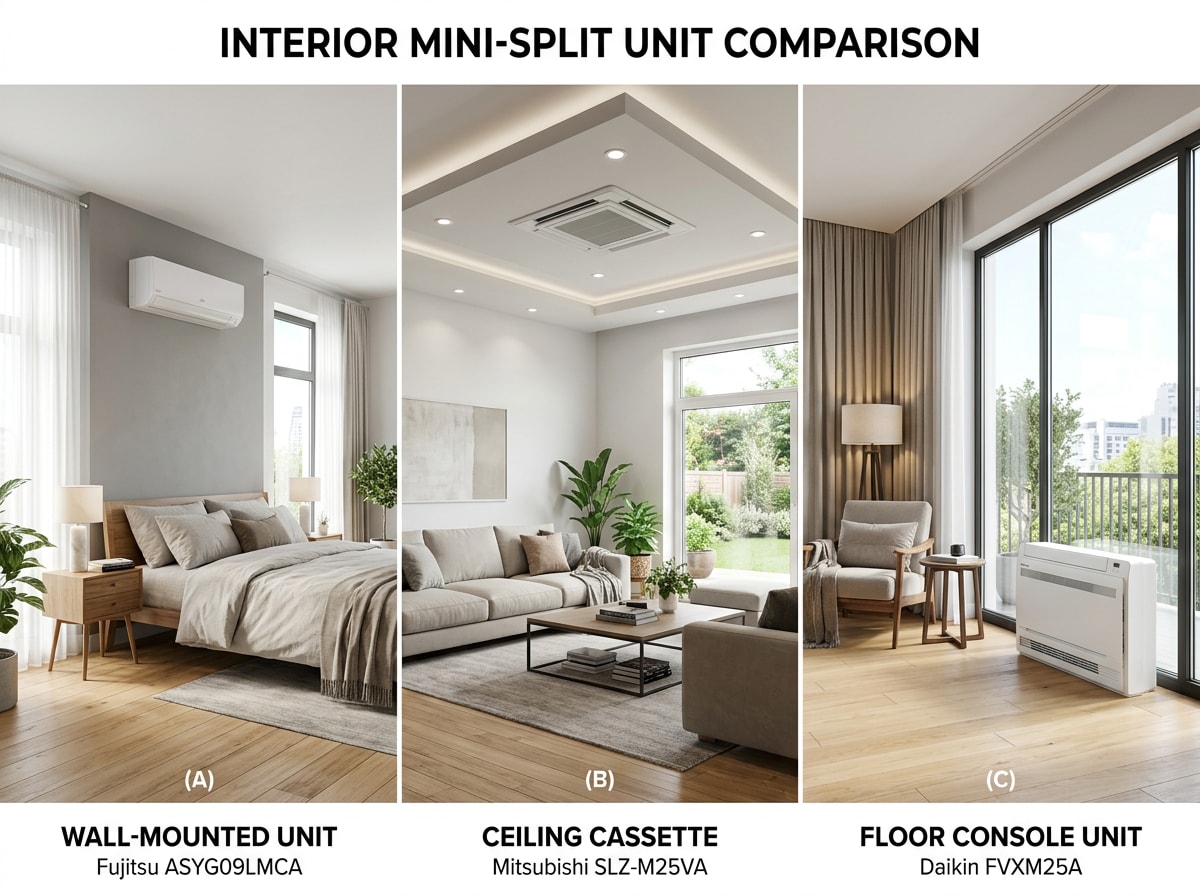
Each indoor head pairs with an outdoor condenser sized to match the connected zones. Placement matters on both ends: indoor heads need to sit away from doorways and drafts so they read room temperature accurately, and outdoor units need clearance for airflow plus a quick check against any HOA rules in planned sections of the city. Coastal moisture and fog in the Bay Area also make corrosion-resistant hardware worth the small upcharge.
Electrical Work and Refrigerant Line Requirements
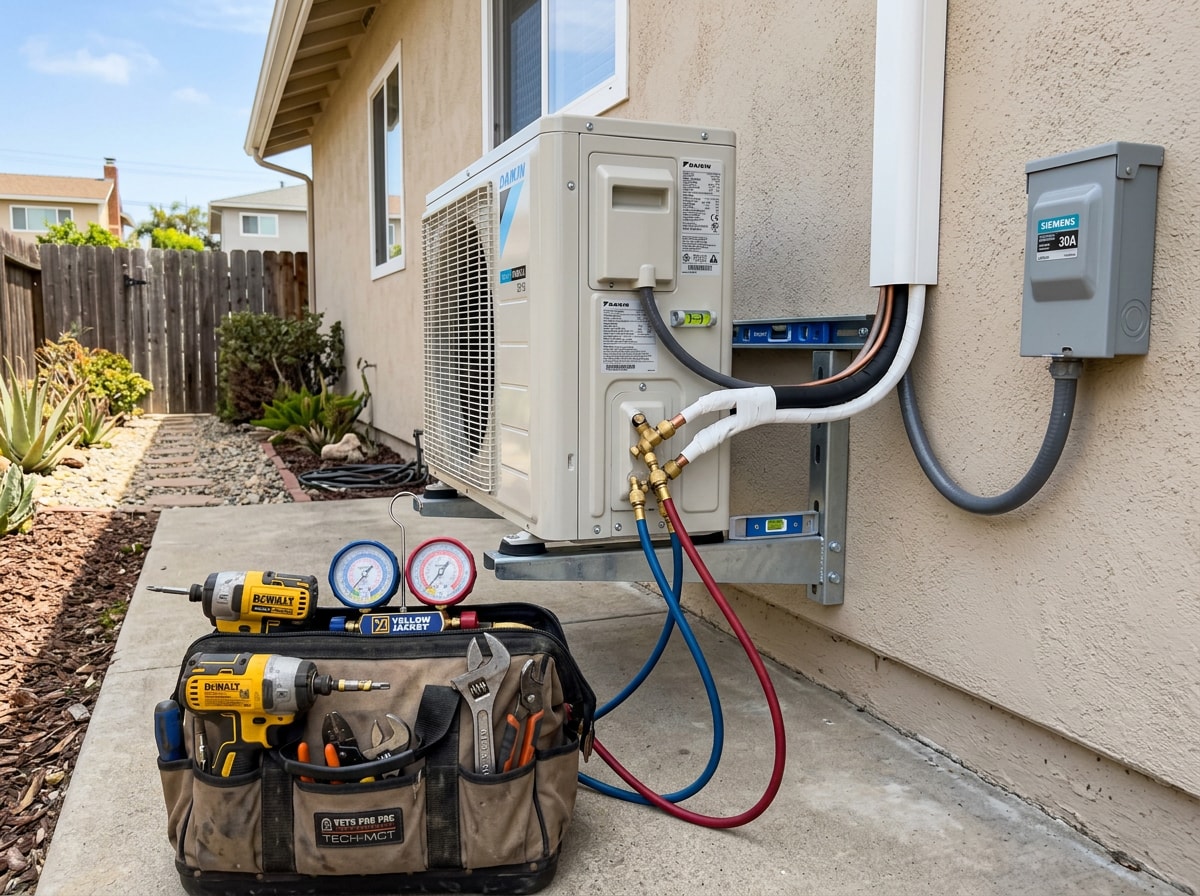
Every mini-split condenser needs its own dedicated circuit, sized to the equipment's BTU capacity. Smaller single-zone systems often run on a 15- or 20-amp 208/240-volt circuit, while larger multi-zone setups may need 30 amps or more, though exact specs should be confirmed against the manufacturer's nameplate rather than assumed. Code also requires a weatherproof electrical disconnect near the outdoor unit, something our electrical component repair team handles as part of a full install.
The line set connecting indoor and outdoor components has to be sized, insulated, and brazed or flared by a technician trained in refrigerant handling. EPA regulations (40 CFR Part 82, Subpart F) under Section 608 of the Clean Air Act require that technicians who maintain, service, repair, or dispose of equipment that could release ozone depleting refrigerants into the atmosphere must be certified . Confirm your installer's techs hold current EPA Section 608 certification before signing anything. Older Palo Alto homes with 100-amp panels sometimes need a panel upgrade before adding the new circuit, especially where solar or EV charging already share capacity.
Permits, Code Compliance, and Installation Timeline
Installing a mini-split in Palo Alto requires a mechanical permit and, in most cases, an electrical permit for the new circuit. Every installation also has to satisfy California's energy code. Title 24, Part 6 of the California Code of Regulations, commonly called the Building Energy Efficiency Standards, sets the minimum legal requirements for energy use in new construction and major remodels of residential and nonresidential buildings , and standards are updated on a three-year cycle by the California Energy Commission . You can check the current cycle and compliance manuals directly on the California Energy Commission's building energy efficiency page.
A typical sequence looks like this:
- Site survey and load calculation
- Permit application and plan review
- Installation (one to three days on-site for a single zone)
- Final inspection and system commissioning
Plan review timing varies by city workload. Plan review for mini-split permits typically takes 1-3 weeks, and inspections are usually three-stage: rough mechanical, rough electrical, and final . Check our Palo Alto, CA service area page for current local scheduling notes.
Common Mini-Split Problems We See in Palo Alto Homes
Most of the service calls we get trace back to the same handful of shortcuts taken during the original install.
- Uneven cooling from an undersized unit or a head placed in a bad spot for airflow
- Limited exterior wall access on older homes, which forces awkward line-set routing if it isn't planned upfront
- Electrical limitations in panels never built for an extra 240-volt circuit
- Condensate drainage mistakes that show up as ceiling or wall stains months later
Experienced installers prevent these issues with an accurate load calculation, an electrical evaluation before quoting, and written documentation of placement decisions, not verbal promises.
Ductless Mini-Split Installation and Repair Services We Provide
A dependable installer should handle more than the initial setup. Look for a company where the same team that installs your system also answers the repair calls later, so nobody has to relearn your system's history from scratch.
Ductless Mini-Split Installation
Installation covers outdoor compressor placement on a stable pad or bracket, refrigerant line routing, electrical hookup, and a weatherproofed wall sleeve sealed against Bay Area winter rain. Homeowners typically choose installation to cool additions, replace aging window units, or add zoned comfort without touching existing ductwork. See our full air conditioning contractor services for package options and scope.
Ductless Mini-Split Repair
Common repair calls involve ice buildup on the indoor coil, blinking error codes pointing to refrigerant or sensor faults, and units that run constantly but never reach the set temperature. Error codes vary by manufacturer, so brand-specific diagnostic experience matters here. Visit our air conditioning repair page to schedule a diagnostic visit.
If you're comparing ductless options across the wider Bay Area, our guide to mini split heat and AC installation in Livermore, CA walks through sizing and cost differences for a similar climate zone.
DIY Mini-Split Kits vs. Hiring a Licensed Installer
DIY mini-split kits with pre-charged refrigerant lines have gotten popular online, and the push-fit connections look simple enough for a weekend project. In practice, the legal requirements don't change just because the kit is marketed as DIY-friendly. Refrigerant work beyond a fully sealed, factory pre-charged system still requires EPA certification, and even push-fit kits need a licensed electrician for the dedicated circuit and disconnect.
Skipping a licensed contractor also risks more than a failed inspection. Manufacturers typically require proof of professional installation to honor warranty coverage, and the City's rebate programs ask for the same paperwork, which means a DIY install can quietly disqualify you from both. Unpermitted work can also complicate a future home sale or an insurance claim after the fact.
How to Vet a Mini-Split Installer Before You Book
California law backs this up directly. If you install, repair, or service heating, ventilation, or air conditioning systems on projects worth $500 or more, California law requires a contractor's license, and the C-20 Warm-Air Heating, Ventilating, and Air Conditioning Contractor License is issued by the California Contractors State License Board . Before you sign a contract:
- Ask for the company's CSLB license number and confirm it's active
- Verify bond and workers' comp status, not just license status
- Confirm the crew doing the refrigerant work holds EPA Section 608 certification
- Get the load calculation and placement plan in writing, not just a verbal estimate
The CSLB actively enforces licensing laws through undercover sting operations and maintains a public license lookup system so consumers can verify any CA contractor license before hiring . Run any installer through the CSLB license check tool before you commit to a deposit.
Learn more about our full HVAC and mini-split team on the Air Control Mechanical homepage, or schedule a consultation to get a written, on-site quote for your home.
FAQ
How much does it cost to install a mini-split in Palo Alto, CA?
National data puts single-zone installs at roughly $2,000 to $5,500, with multi-zone systems running $4,500 to $14,000 depending on zone count. Palo Alto's own Electrify My Home program lists $3,250 to $10,900 for a 1-to-3-zone system through its full-service path, rebate included, which is the most locally relevant figure available.
Are there rebates for mini-split installation in Palo Alto?
Yes. The City offers up to $2,500 (or $5,000 for income-eligible residents) toward a qualifying heat pump system replacing fossil fuel heating, plus add-on rebates of up to $500 per circuit for the electrical work. You must apply before your contractor starts the job.
Do I need a permit to install a mini-split in California?
Yes. California requires a mechanical permit for mini-split installation almost everywhere, including Palo Alto, and most projects also need a separate electrical permit for the new dedicated circuit.
Can I install a mini-split myself?
Not entirely. Mounting an indoor head is straightforward, but connecting refrigerant lines or wiring the dedicated circuit legally requires a licensed, EPA-certified contractor, and DIY work can void both the equipment warranty and your eligibility for City rebates.
How long does a mini-split installation take?
A single-zone install usually takes one day on-site; multi-zone systems may take two to three days. Add one to three weeks for permit plan review, which extends the overall project timeline.
How many zones does a typical Palo Alto home need?
Most single-family homes doing a partial retrofit, such as an addition or a bedroom without ducts, need one to two zones. Whole-home ductless conversions on Eichler-style slab homes often run three to five zones depending on layout.
About the Author
Air Control Mechanical, owned by Segundo Victor Sanchez, holds a Warm Air Heating, Ventilating And Air Conditioning license (CSLB #1017399) according to the California license board . Our crews regularly open Eichler slab walls for Palo Alto mini-split retrofits, which is why we check for buried radiant tubing before any line-set penetration goes in. If you're ready to move forward, contact us for a written, on-site quote.