Furnace replacements in Los Altos usually mean more than swapping one box for another. A proper job accounts for your home's ductwork, square footage, and insulation, not just the old unit's size. Getting the efficiency tier and sizing right matters just as much as the installation work itself.
When to Replace Your Furnace: Warning Signs to Watch
Most furnaces last 15 to 20 years with regular maintenance. Once a system crosses the 15-year mark, the ENERGY STAR guidance on replacing heating equipment suggests it's worth comparing repair costs against a new, qualified furnace rather than automatically fixing what breaks.
Watch for these signals that a repair call is really a replacement conversation:
- The furnace is 10-15+ years old and repairs are becoming more frequent
- Some rooms stay cold while others overheat
- Energy bills climb even though usage habits haven't changed
- The unit makes banging, rattling, or screeching noises during startup or shutdown
- You notice a burning smell, soot near the vents, or short-cycling on and off
A simple rule helps when a repair estimate lands on the table: multiply the repair quote against how close it comes to half the cost of a new system. If a single repair approaches that threshold, replacement is usually the better long-term spend. Our furnace repair page covers when a fix still makes sense, and our furnace replacement page breaks down what a full swap involves.
Furnace Replacement Cost in Los Altos
Pricing depends on efficiency tier, BTU capacity, ductwork condition, and whether venting or electrical work changes with the new unit. The table below reflects the general ranges homeowners in the Bay Area typically see once labor, equipment, and permitting are included.
| Furnace Type | AFUE Range | Typical Project Cost |
|---|---|---|
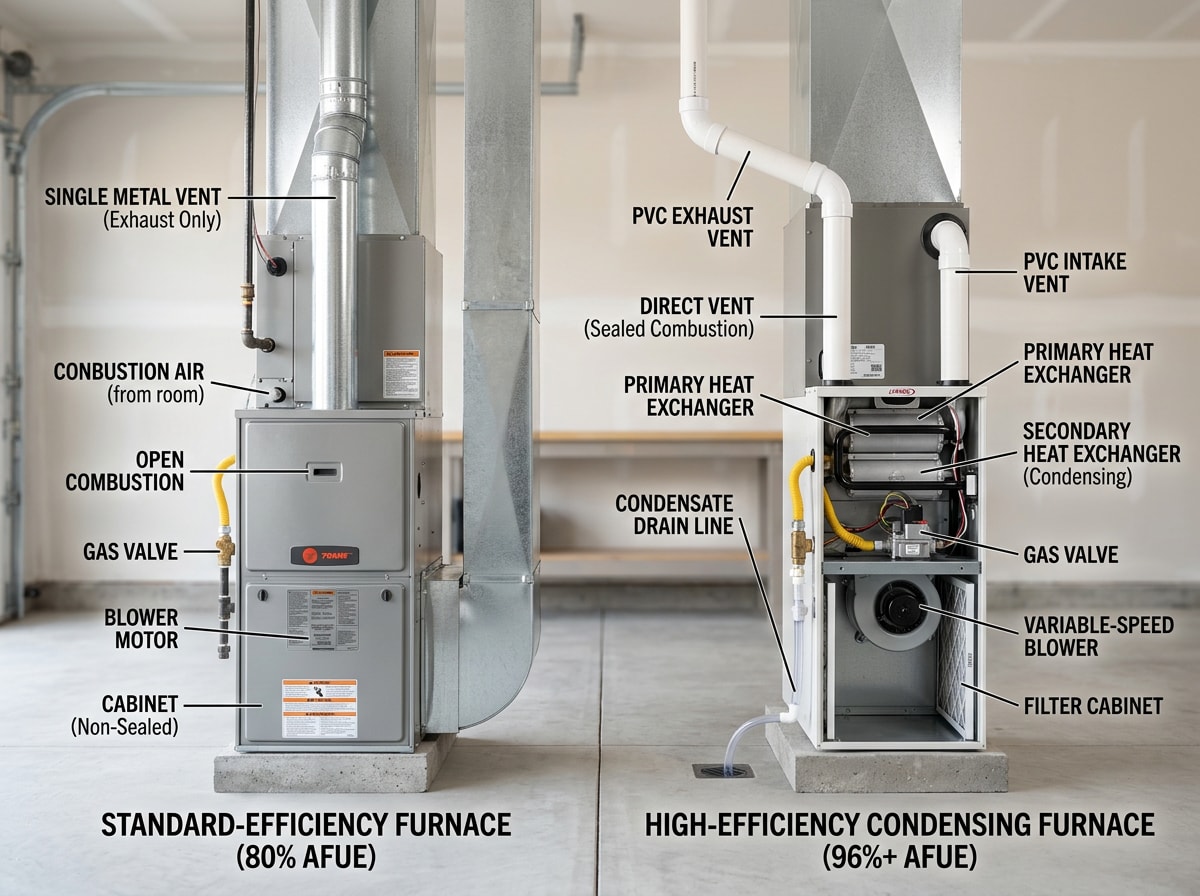
| Standard-efficiency gas furnace | 80-89% | Lower end of the market, simplest install |
| High-efficiency condensing furnace | 90-98% | Higher upfront cost, added venting work |
| Electric furnace | N/A (resistance heat) | Lower install cost, higher operating cost |
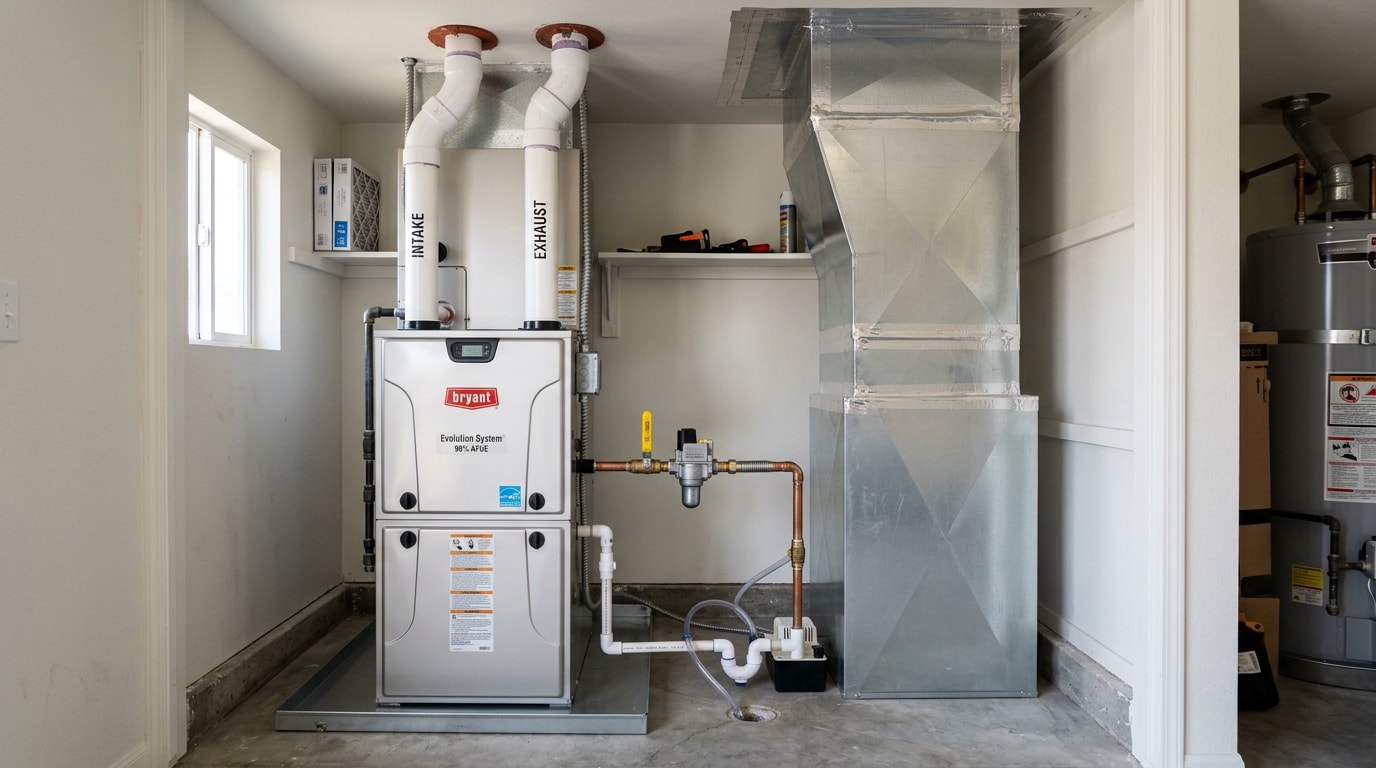
High-efficiency condensing models use a secondary heat exchanger and PVC venting to pull extra heat from exhaust gases. The ENERGY STAR furnace product criteria set minimum AFUE thresholds by region, and most certified gas furnaces sold today land well above the old 80% standard. Standard units cost less to install, while condensing furnaces typically pay back the price difference over several winters through lower gas bills.
Choosing the Right Furnace for Your Home
Choosing a furnace means weighing fuel type, home size, ductwork condition, and efficiency tier together.
- Gas furnaces heat faster and cost less to run for most Bay Area homes
- Electric furnaces install more simply but usually carry higher monthly operating costs
- BTU capacity should match your home's actual heat loss, not just the old unit's rating
Many older Los Altos homes benefit from a fresh load calculation instead of a like-for-like swap, especially after window or insulation upgrades. If your ductwork is undersized or leaky, pairing the new furnace with ductwork installation prevents the new equipment from fighting an old distribution system. In homes near Loyola Corners and other original-construction neighborhoods, we regularly find 1960s-era ducts that choke airflow no matter how efficient the new furnace is rated.
The Professional Installation Process
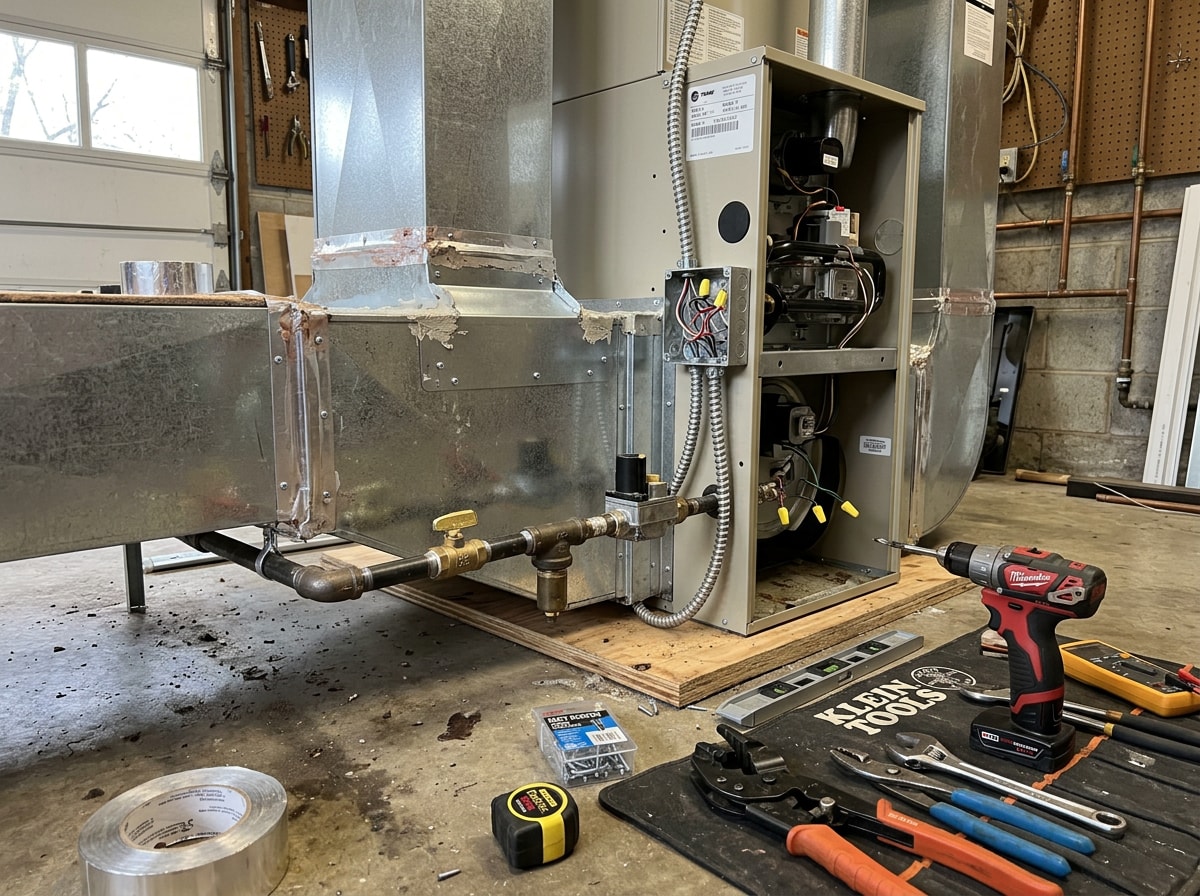
Furnace installation safety isn't optional. Gas line connections, high-voltage electrical hookups, combustion venting, and structural penetrations all carry code requirements that DIY attempts routinely get wrong.
A proper furnace replacement follows these steps:
- Heat load calculation for the home's actual square footage and insulation
- Equipment selection based on fuel type, efficiency tier, and ductwork compatibility
- Removal and disposal of the old unit
- Gas connection and pressure testing
- Venting and condensate routing
- Electrical and thermostat wiring
- Final commissioning test to confirm safe, efficient operation
California requires a mechanical permit for nearly every furnace change-out, including like-for-like swaps of the same fuel type and capacity. The job also needs to meet Title 24 energy standards set by the California Energy Commission's Building Energy Efficiency Standards, which govern minimum equipment efficiency and duct performance on altered systems. A licensed technician pulls the permit, schedules inspection, and handles the paperwork so the system is legal to operate.
Why Choose a Professional Installer in Los Altos
The contractor you hire shapes how well a new furnace performs for years afterward, not just the equipment brand. This guide was reviewed by a lead install technician with Air Control Mechanical, who has spent years sizing and commissioning furnace replacements across Los Altos, Palo Alto, and the surrounding Peninsula. A trusted heating contractor brings proper licensing, insurance, and a thorough home assessment before the first wrench comes out.
Skipping a load calculation and sizing a new furnace off the old unit's tonnage is a common mistake. An oversized furnace short-cycles, wearing out components early and leaving cold spots throughout the home. An undersized unit runs constantly without ever quite keeping up, especially if insulation or windows have changed since the original install.
If your current system is still salvageable, our furnace repair team will say so honestly. When it's time for something new, our HVAC system replacement service covers the full picture, not just the furnace box. Get a free estimate before your system fails during a cold snap, so you have time to compare options instead of settling for whatever's in stock.
Explore our full heating contractor services or visit the Air Control Mechanical homepage to see the rest of what we handle for Los Altos homeowners, from heat pump installation to smart thermostat upgrades. We also serve nearby Palo Alto, Sunnyvale, and Santa Clara.
FAQ
How much does furnace replacement cost in Los Altos?
Furnace replacement cost in Los Altos varies based on AFUE rating, capacity, and installation complexity, ranging from standard-efficiency units on the lower end to considerably more for high-efficiency condensing systems. Most licensed contractors, including Air Control Mechanical, offer free estimates before any work begins.
How long does a furnace installation take?
Most straightforward replacements finish in a single day when the existing venting, gas supply, and ductwork are compatible with the new unit. Jobs requiring new venting, electrical upgrades, or ductwork changes typically run closer to a day and a half to two days.
Do I need a permit to replace a furnace in California?
Yes. California requires a mechanical permit for nearly every furnace change-out, even a like-for-like replacement of the same fuel type and capacity, and the job must meet current Title 24 energy standards before it passes final inspection.
Should I repair or replace my furnace?
If the furnace is under 10 years old and the repair is minor, repair usually makes sense. If it's 12-15+ years old, repairs keep recurring, or a single repair quote approaches half the cost of a new system, replacement is typically the better financial choice.
What furnace installation services do you offer in Los Altos?
Typical services include new furnace installation, high-efficiency upgrades, gas furnace replacement, and swapping out failing systems before they break down completely. See our furnace installation page for the full scope, or our emergency HVAC repair service if your current system has already quit.