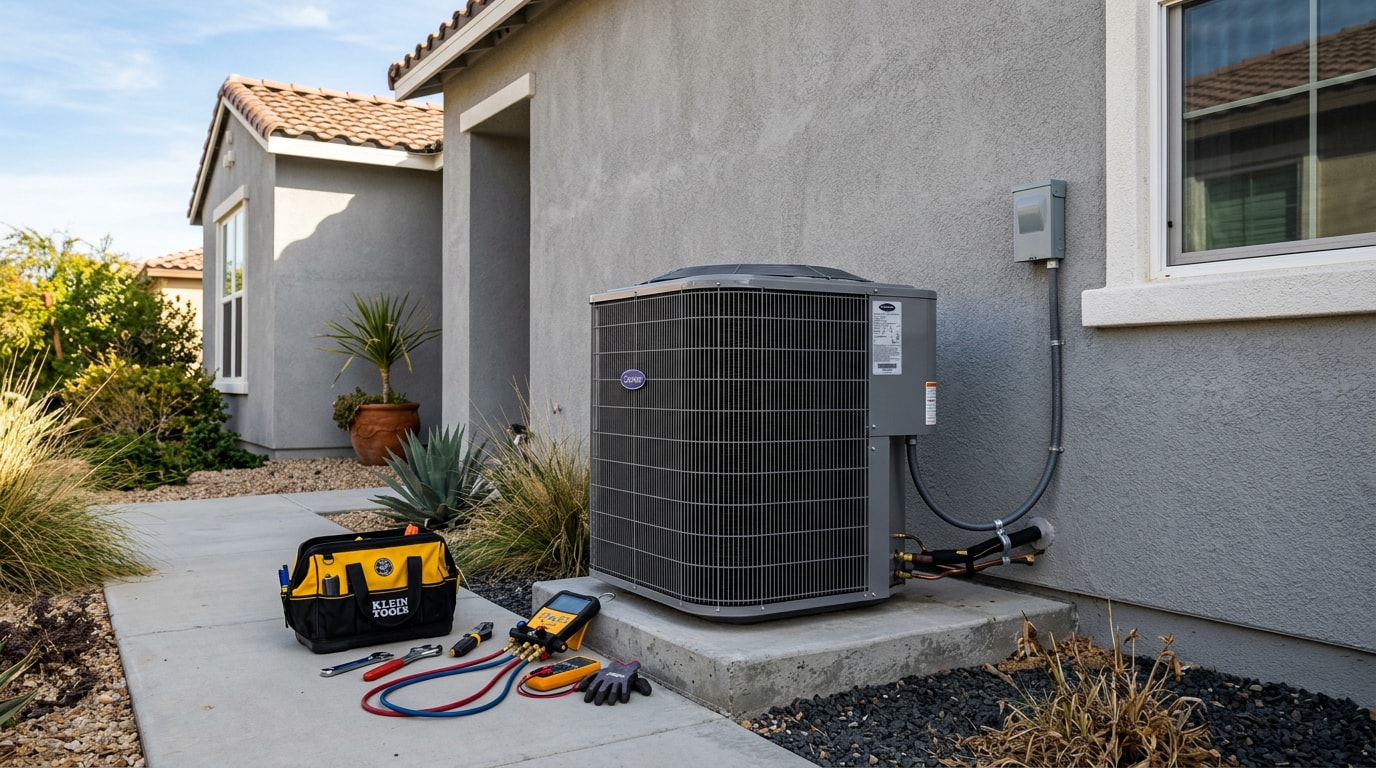
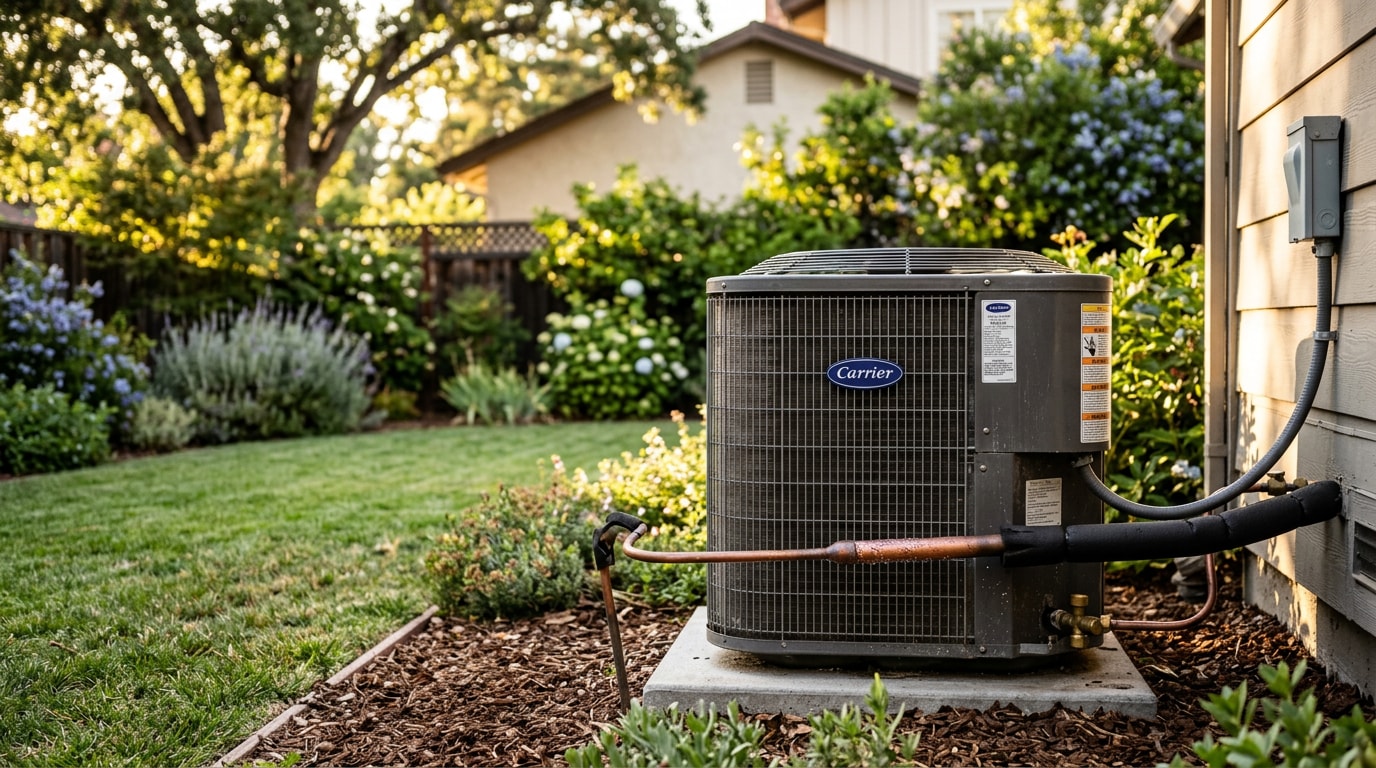
AC leaking in San Ramon almost always means one of two very different problems: refrigerant escaping the sealed system, or water dripping from a clogged condensate line. One is a safety and environmental issue that only a licensed technician can legally fix. The other is sometimes a five-minute DIY job. Here's how to tell which one you have, what to check first, and what repairs actually cost in San Ramon this year.
Visit Air Control Mechanical to see our services and request a free estimate.
Refrigerant Leak or Water Leak? How to Tell the Difference
A refrigerant leak shows up as weaker cooling, rising energy bills, a hissing sound near the indoor or outdoor unit, and ice forming on the evaporator coil or refrigerant lines. These signs mean refrigerant is escaping the sealed system faster than it should. Once that happens, the unit can no longer absorb heat properly.
A condensate (water) leak looks and behaves differently. It's usually silent, shows up as water pooling near the indoor air handler, and doesn't affect your energy bills the way a refrigerant leak does.
Because the two get confused constantly, here's a quick side-by-side comparison:
| Symptom | Refrigerant Leak | Condensate (Water) Leak |
|---|---|---|
| Sound | Hissing or bubbling near coil/lines | Usually silent |
| Visual clue | Ice on coil or lines, weak airflow | Water pooling near indoor unit |
| Energy bills | Climbing steadily | Typically unaffected |
| Who should handle it | Licensed technician only | Often a clogged drain, sometimes DIY-fixable |
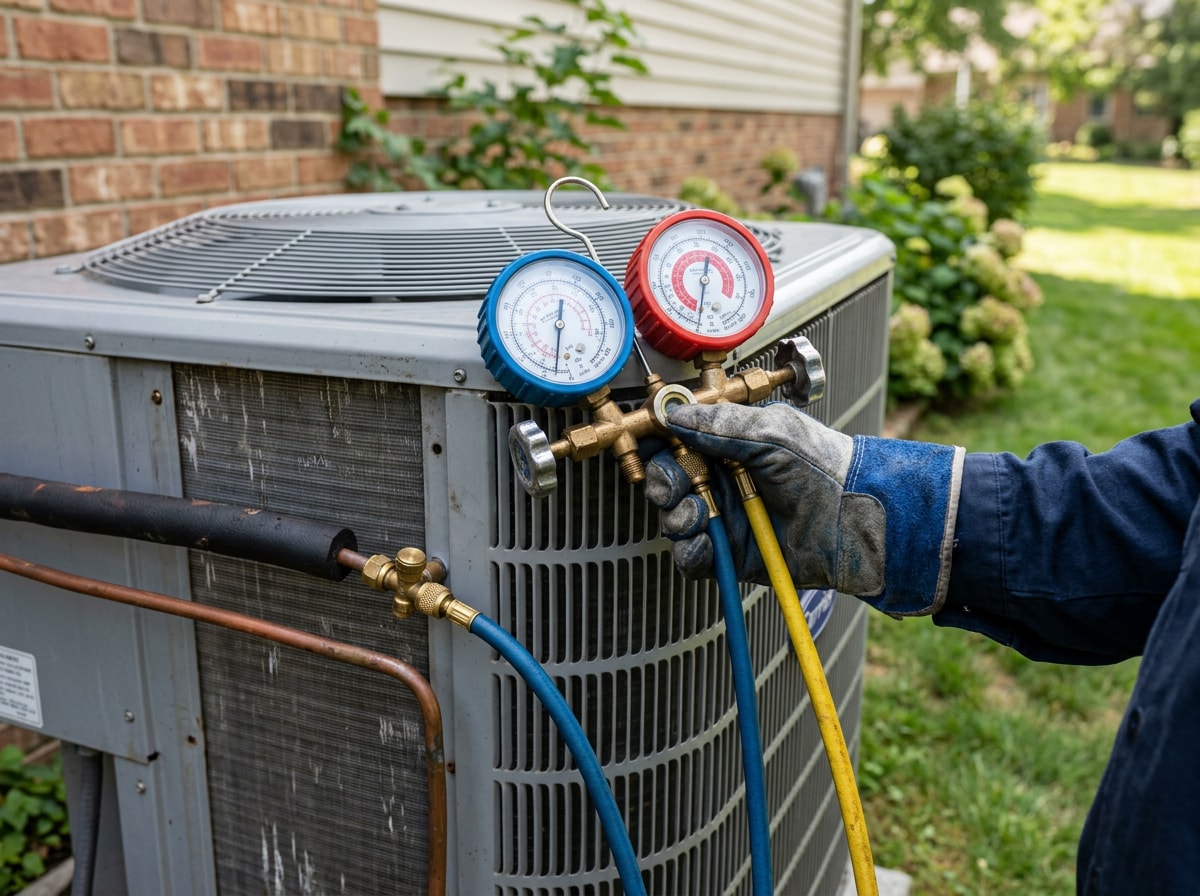
Refrigerant work is federally regulated, not just a best practice. Technicians must hold current certification under EPA regulations that require technicians who maintain, service, repair, or dispose of equipment that could release ozone depleting refrigerants into the atmosphere to be certified . That's true whether the leak is a pinhole in a coil or a loose fitting, so this isn't a DIY fix regardless of the cause.
In our service calls across San Ramon's Diablo Valley neighborhoods, the leak we actually diagnose most often each summer isn't refrigerant at all. It's an algae-clogged condensate line that's tripped the float switch. Homeowners assume the worst, but a five-minute drain flush frequently solves it.
AC Leaking in San Ramon? Check These Three Things First
A few quick homeowner checks can rule out simple causes before you pay for a truck roll.
1. Not Cooling? Check Your Thermostat First
Before assuming the worst, check your thermostat. Confirm it's set to "cool," the target temperature is below room temperature, and the batteries aren't dead. A quick thermostat check resolves more San Ramon AC troubleshooting calls than people expect, and it costs nothing. If the display is blank or unresponsive even with fresh batteries, you may be dealing with a thermostat repair issue rather than the AC itself.
2. Power Problem? Check Your Circuit Breakers
If the system won't power on at all, check your electrical panel for a tripped AC breaker. Then look for a separate switch near the indoor air handler. A tripped breaker or flipped air handler switch is a common, harmless power issue. Reset it once. Call a technician if it trips again, since repeated tripping can point to an electrical component failure rather than a one-time fluke.
3. Check Your Drain Line for Obstructions
San Ramon's hot, dry Diablo Valley summers encourage algae and mineral buildup inside condensate lines. That buildup can clog the drain and trip the float switch, a safety feature that shuts the system down before the pan overflows. A blocked line is a frequent cause of AC leaking water around the indoor unit.
To clear a minor clog yourself:
- Turn the system off at the thermostat and breaker.
- Locate the condensate drain access point, usually a T-shaped PVC fitting.
- Use a wet/dry vacuum to pull the clog, or flush with a cup of distilled vinegar.
- Run the system and confirm water drains freely.
Stop and call a professional if you see standing water near electrical components. That's not a safe DIY situation.
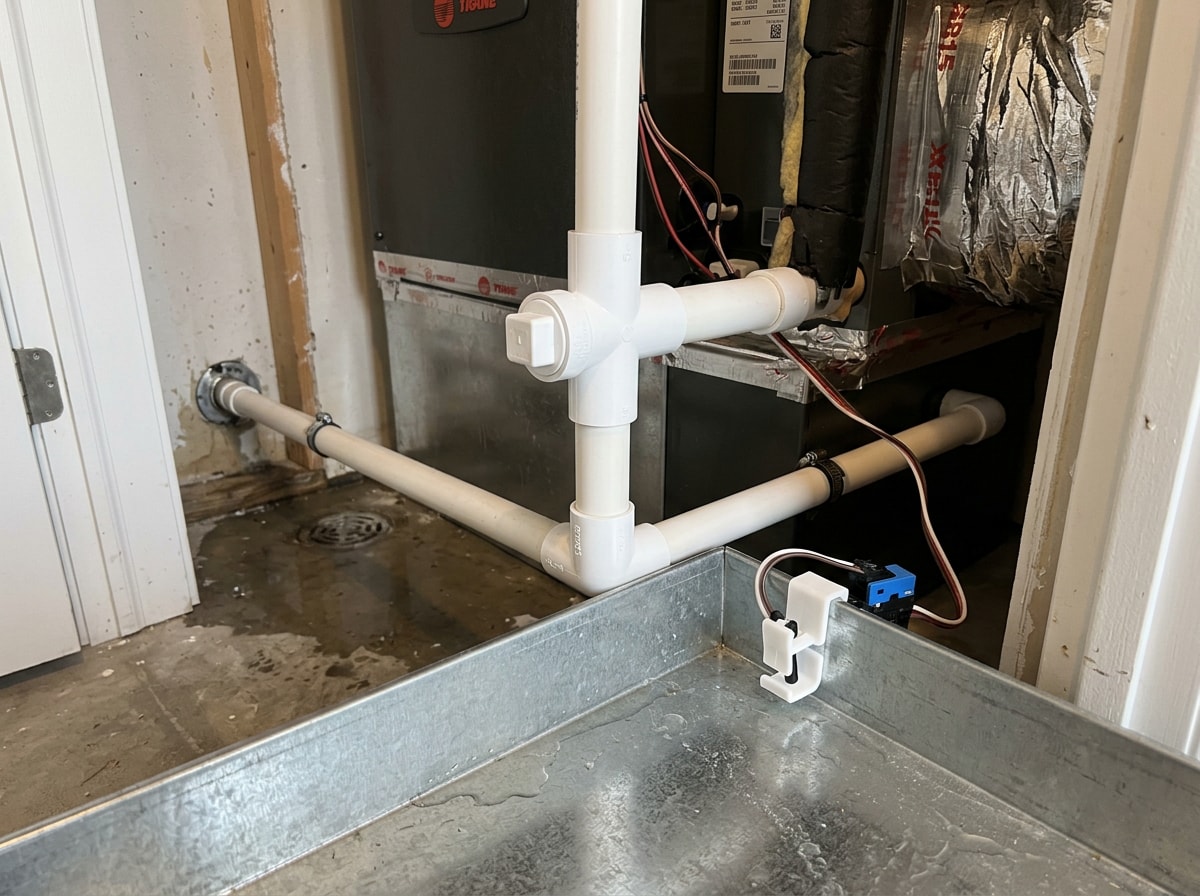
Checking the condensate drain is also standard advice, not just a local tip. ENERGY STAR recommends checking and inspecting the condensate drain, noting a plugged drain can cause water damage in the house and affect indoor humidity levels . Pair that with filter checks, since a clogged or dirty filter can restrict airflow and freeze the coil, which then thaws into extra water pooling at the unit. If you're overdue, air filter replacement is one of the cheapest ways to head off that cycle.
When You Need Professional AC Repair
Some problems go beyond a quick check. These are signs that call for a licensed technician, not another DIY attempt:
- Grinding or screeching noises from the indoor or outdoor unit
- Insufficient cooling despite a correct thermostat setting
- Climbing utility bills with no change in usage
- A unit that short-cycles (turns on and off repeatedly)
- Visible leaks around the cooling unit
- Ice on the outdoor coil
Pushing through these issues usually leads to a bigger repair bill later. If you're noticing any of these, it's worth scheduling a visit from our air conditioning repair team rather than waiting for a full breakdown. We serve homeowners throughout San Ramon and the surrounding Tri-Valley.
Common AC Leak Repair Projects in San Ramon
Once a technician is on-site, AC leak repair projects generally fall into a few categories:
- Sealing or replacing a leaking refrigerant line
- Clearing and sanitizing a clogged condensate drain
- Repairing or replacing a corroded evaporator coil
- Patching or replacing a cracked condensate pan
Coil and refrigerant line repairs tend to be the most involved, since remaining refrigerant often needs to be recovered first under the same EPA handling rules mentioned above. If the issue turns out to be the outdoor unit itself refusing to cycle on, that's a different failure mode worth reading up on separately; our guide on AC condenser not turning on walks through those causes and costs.
AC Leak Repair Costs in San Ramon, CA
AC leak repair cost varies widely depending on what's actually failing. Here's a general 2026 range for the San Ramon area:
| Repair Type | Estimated Cost (2026) |
|---|---|
| Leak detection/assessment | $150 – $400 |
| Minor refrigerant leak repair | $200 – $600 |
| Evaporator coil repair/replacement | $600 – $2,000+ |
| Condensate drain or pan repair | $150 – $500 |
San Ramon repair pricing tends to run slightly higher than inland cities, driven by local labor rates and peak summer demand. If a coil or compressor repair is quoted anywhere near the cost of a new unit, it's worth comparing against air conditioning replacement before committing, especially on a system already past 12-15 years old.
Why This Matters Beyond the Repair Bill
A leak that sits unaddressed doesn't just cost you comfort. Standing moisture around an indoor unit is exactly the kind of damp condition that encourages mold growth. Mold can cause many health effects, including a stuffy nose, sore throat, coughing or wheezing, burning eyes, or skin rash , and people with asthma or who are allergic to mold may have severe reactions . That's reason enough to treat a "minor" water leak as worth fixing promptly rather than something to live with through the summer.
Why Trust This Guide
This guide was put together by the HVAC technicians at Air Control Mechanical, who diagnose and repair AC leaks throughout San Ramon and the greater East Bay every cooling season. We've built this article around the same checks and repair categories our techs run through on an actual service call, not generic advice pulled from a manual. If you'd rather skip the troubleshooting and get a technician out to look at it, get a free estimate and we'll take it from there.
FAQ
What Causes an AC Leak?
Most AC leak causes trace back to corrosion on the evaporator coil, physical damage to refrigerant lines, loose fittings from years of vibration, or simple age. Older systems are especially prone to pinhole leaks as metal components weaken over time.
How Do I Know If My AC Has a Leak?
Signs of an AC leak include noticeably weaker cooling, a hissing sound near the unit, a faint chemical odor, or standing water near the indoor equipment. If your AC isn't cooling your San Ramon home the way it used to, it's worth a professional inspection.
Why Is My Air Conditioner Leaking Water Inside My House?
The most common cause is a clogged condensate drain line. Algae and dust build up inside the line, block the flow, and force water to back up into the drain pan and overflow. A dirty air filter, a frozen evaporator coil, or a cracked drain pan can cause the same symptom.
Can a Dirty Air Filter Cause My AC to Leak Water?
Yes. A clogged filter restricts airflow across the evaporator coil. The coil gets too cold, ice forms on it, and when the system shuts off that ice melts faster than the drain pan and line can handle, causing an overflow. Routine air filter replacement prevents this.
Can I Still Use My AC If It's Leaking Water?
You can technically run an AC that's leaking water, but it isn't a good idea. Continued operation risks damage to flooring, drywall, and the unit's own electrical components. Turn the system off and address the clog or float switch issue before running it again.
Is a Leaking AC Unit an Emergency?
A leaking AC becomes an emergency when water pools near electrical components, spreads into living space, or appears alongside a refrigerant leak. Minor drips causing no damage can usually wait for a scheduled visit, but emergency HVAC repair is the safer call if you're unsure.
What Could Cause Hissing or Grinding Sounds From My AC?
A hissing sound usually points to refrigerant escaping under pressure through a small crack or loose fitting. Grinding noises are different. They typically signal a failing motor bearing or compressor issue rather than a leak, and usually mean service is needed soon.
How Do Technicians Test for a Refrigerant Leak?
Technicians typically use an electronic leak detector, UV dye injected into the system, or a soap-bubble test on accessible fittings. All three methods pinpoint the exact leak location so the repair targets the actual failure point instead of just recharging refrigerant that will leak out again.